

To read Kratom lab test results, start by reviewing the lab report, also known as the Certificate of Analysis (COA), and check the batch number, test date, alkaloid percentages, and contaminant screening results. These reports show whether the Kratom was tested by an independent lab and whether it passed safety standards.
In this guide, we’ll break down each section of a Kratom lab test report, explain what the numbers mean, show you how to spot red flags, and help you verify that the results are legitimate before you make a purchase.
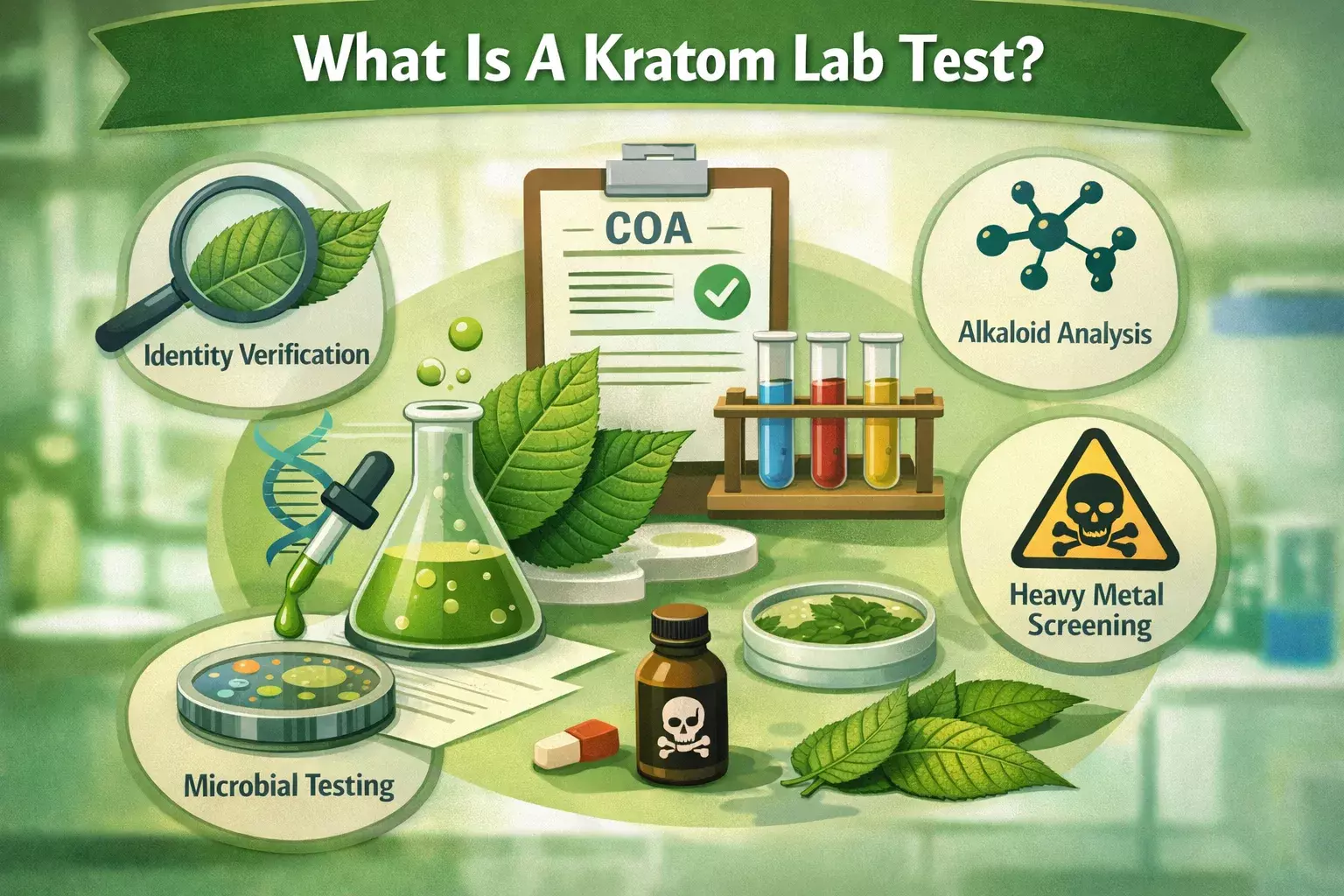
What Is A Kratom Lab Test?
A Kratom lab test is a third-party analysis that verifies a batch of Kratom is authentic Mitragyna speciosa, measures alkaloid levels, and checks for contaminants.
Because Kratom is largely unregulated, Kratom lab testing confirms identity, potency, and safety, with results documented in a Certificate of Analysis (COA).
Here’s what a Kratom lab test results actually show:
Alkaloid Analysis: Measures Mitragynine levels to confirm potency and consistency.
Heavy Metal Screening: Tests for lead, arsenic, cadmium, and mercury.
Microbial Testing: Checks for Salmonella, E. coli, yeast, and mold.
Identity Verification: Confirms the material is authentic Mitragyna speciosa.
Why Reputable Vendors Invest In Kratom Lab Testing
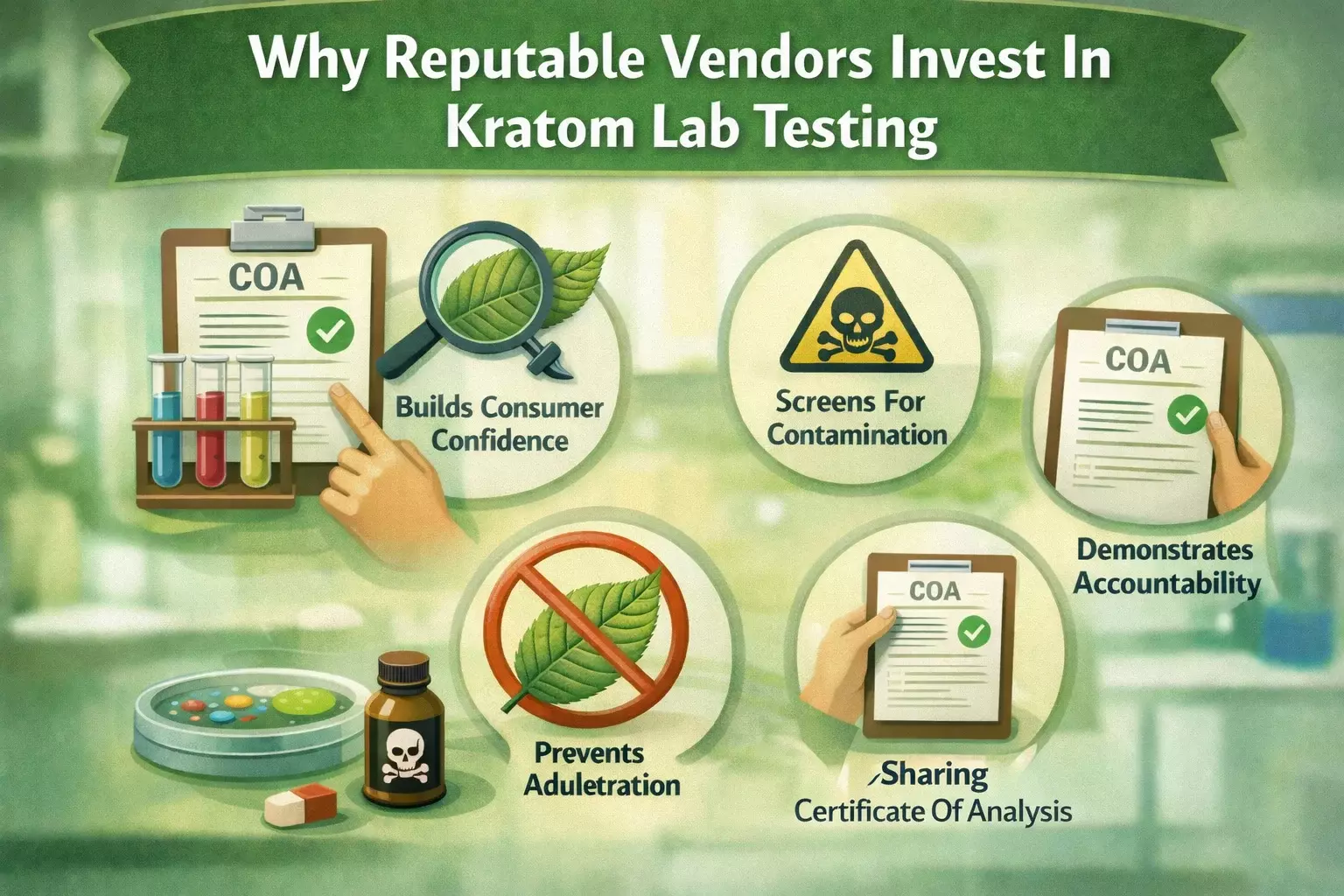
Reputable vendors invest in testing for Kratom to build trust among buyers with limited federal oversight. Since Kratom is not approved as a dietary supplement by the FDA, third-party lab testing acts as a voluntary safeguard that shows a vendor is willing to verify what they sell.
Here’s why it matters:
Builds Consumer Confidence: Independent lab reports demonstrate transparency, rather than asking buyers to take a vendor’s word for it.
Screens For Contamination: Testing for Kratom helps detect heavy metals, microbes, or other unwanted substances before products reach customers.
Prevents Adulteration: Lab analysis confirms the product hasn’t been mixed with undisclosed ingredients.
Demonstrates Accountability: Sharing Certificates of Analysis (COAs) signals that a vendor stands behind each batch.
In short, reputable sellers invest in testing not because they’re required to, but because transparency and verification matter to informed buyers.
How To Read A Kratom Test Report: Step-By-Step Process
To properly review a kratom test report, read it in order and check each section carefully. Here’s how to do it:
Step 1: Verify The Basics
Before looking at the numbers, confirm the report itself is legitimate.
Third-Party Testing: Ensure the COA comes from an independent, accredited lab, not from an internal vendor document.
Match Batch Numbers: The Lot or Batch Number on the report should match the number on your product packaging exactly.
Date Check: Testing should be recent, ideally within the last 12 months.
Step 2: Check For Microbial Contaminants
Because Kratom is plant-based, proper screening is essential. Look for:
Salmonella: Should read ‘Negative’ or ‘Not Detected.’
E. coli: Should read ‘Negative’ or ‘Not Detected.
Mold & Yeast: Typically under 100,000 CFU/g.
Coliforms: Often acceptable below 10,000 CFU/g.
Step 3: Check Heavy Metal Levels
Kratom can absorb metals from soil, so this section matters. Look for results on:
Arsenic: Usually below 2 PPM
Cadmium: Below 0.85 PPM
Lead: Below 1.2 PPM
Mercury: Below 0.41 PPM
Note: Most reports will clearly show ‘Pass’ if levels meet safety limits.
Step 4: Analyze Alkaloid Content
This section shows product strength. Focus on:
Mitragynine: Commonly ranges from 0.5%–1.5% in raw leaf powder, sometimes slightly higher.
Total Alkaloids: Gives a broader picture of overall strength.
Step 5: Understand Key Terms
A few simple definitions make a Kratom test easier to read:
ND (Not Detected): Nothing was found, good for contaminants.
<LOQ: Present in very tiny amounts, below measurable limits.
CFU/g: Measures bacteria or mold levels.
PPM: Used to measure heavy metals.
How To Read A Kratom Lab Test Results: An Example!
Now let's look at the actual lab report for Green Dragon / Super Green Kratom and see what it shows.
Report Details
Laboratory: ProVerde Laboratories
Certificate ID: 135117
Lot Number: Z1TV1006CC
Matrix: Kratom Powder – Ground Plant Material
Testing Dates: November 13–19, 2025
Note: The report includes a lab director's signature and an accreditation reference, confirming it's a third-party Kratom test.
Alkaloid Profile (Potency Snapshot)
Under the Kratom alkaloids section:
Mitragynine: 2.75% (27.5 mg/g)
Total Alkaloids: 4.49%
Heavy Metal Results
The heavy metal analysis shows:
Arsenic: PASS
Cadmium: ND (PASS)
Mercury: ND (PASS)
Nickel: PASS
Lead: PASS
Note: All metals fall within the listed use limits. No elevated contamination markers appear in this Kratom test.
Microbial Screening
Microbial results show:
Total Aerobic Count: PASS
Coliforms: PASS
Yeast & Mold: PASS
All results are below the stated limits, indicating the batch was screened for bacterial and fungal contamination.
What This Report Indicates
For this Green Dragon / Super Green batch:
Identity confirmed as Kratom powder
Alkaloid content clearly disclosed
Heavy metals within acceptable limits
Microbial testing passed
This is what properly lab-tested Kratom documentation looks like: specific batch data, measurable results, and a clear PASS status across safety categories.
Pro Tip:Look for consistency across multiple batches of the same product. If alkaloid levels swing dramatically from one report to another, it may signal inconsistent sourcing or processing. Stable results over time are a stronger indicator of dependable lab-tested Kratom than a single impressive report. |
What A 'Pass' Result Really Means
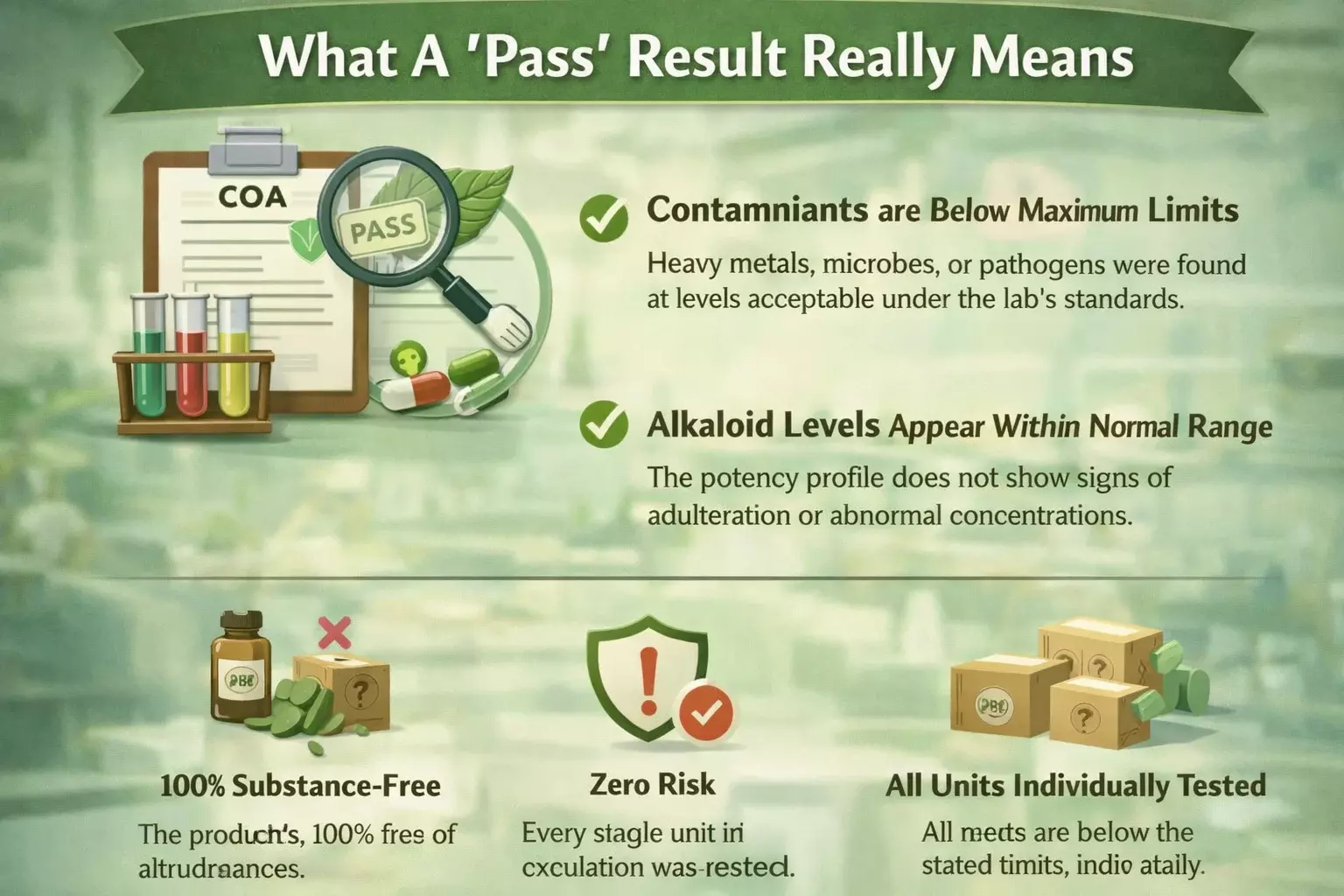
On Kratom lab test results, a 'Pass' means the tested batch falls within the safety limits set for contaminants and meets expected ranges for alkaloid content. In simple terms, the sample tested did not exceed the lab's allowable thresholds.
Here's what that usually indicates:
Contaminants are below maximum limits: Heavy metals, microbes, or pathogens were found at levels considered acceptable under the lab's standards.
Alkaloid levels are within the normal range: The potency profile shows no signs of adulteration or abnormal concentrations.
Additionally, a 'Pass' does not mean:
The product is 100% free of all substances.
The batch carries zero risk.
Every unit in circulation was tested individually.
A ‘Pass’ result is reassuring, but only when the product actually comes with verified lab testing. Not all kratom on the market does, and that’s where the real difference begins.
Lab-Tested Kratom vs Non-Tested Kratom: What’s The Real Difference?
Here’s a quick table to help you make the distinction:
Buyer Consideration | Lab-Tested Kratom | Non-Tested Kratom |
Proof Of Quality | Documented results available | No public documentation |
Batch Transparency | Specific lot tied to the report | Often no traceable batch data |
Consistency Tracking | Can compare reports over time | No way to verify consistency |
Vendor Accountability | Lab name and accreditation listed | Vendor claims only |
Purchase Confidence | Based on measurable data | Based on trust alone |
Common Red Flags In Kratom Lab Test Results
Keep an eye out for these less obvious warning signs:
Vague Product Description: The report doesn’t clearly state powder, capsule, or shots.
Missing Testing Method: No mention of how the analysis was performed (e.g., LC, ICP-MS).
Unusually High Alkaloid Claims: Numbers far outside normal raw leaf ranges without explanation.
No Reporting Limits Listed: Results shown without detection thresholds for context.
Generic PDF With No Unique Identifiers: Looks reusable rather than batch-specific.
No QR Code or Verification Option: No way to independently confirm authenticity.
Quick Recap On Reading Kratom Lab Test Results
Here's what to keep in mind:
Start with the basics: Confirm the report matches the batch and comes from an independent lab.
Review safety sections carefully: Check microbial and heavy metal results.
Assess potency realistically: Look at alkaloid levels without chasing extremes.
Understand what ‘Pass’ actually means: It confirms limits were met, not perfection.
Watch for subtle inconsistencies as details matter.
Compare over time: Consistency across reports builds confidence.
Found this helpful? Take a look at our lab-tested product range to see how verified batches are presented.
Frequently Asked Questions
1. How often should Kratom lab test results be updated?
Lab test results should be updated for every new batch or lot to ensure the product meets safety and quality standards.
2. Are Kratom lab test results required by federal law?
There is no federal requirement mandating standardized lab testing for Kratom, though some states have their own regulations.
3. Can the Kratom lab reports vary between batches?
Yes, Kratom lab results can vary between batches, even with the same name, since alkaloid levels like Mitragynine depend on growing conditions, harvesting, and processing.
4. What does ISO accreditation mean on a lab report?
It indicates the laboratory meets recognized international standards for testing procedures and quality control.
5. Do capsules and powder have separate Kratom lab test results?
They may. If the capsule contains the same raw batch as the powder, the COA may apply to both, but packaging differences can require separate testing.
6. Can I request Kratom lab test results from a vendor?
Yes. Transparent vendors typically provide Certificates of Analysis upon request or publish them on their website.
7. Why do some Kratom lab test results show different measurement units?
Labs may report results in percentages, mg/g, ppm, or µg/kg depending on the substance being measured.
8. Does a higher Mitragynine percentage always mean better quality?
Not necessarily. Quality depends on consistency, cleanliness, and accurate labeling, not just on one alkaloid number.
Disclaimer: This article is for informational purposes only and does not constitute medical, legal, or professional advice. Product quality and regulations may vary by location.