
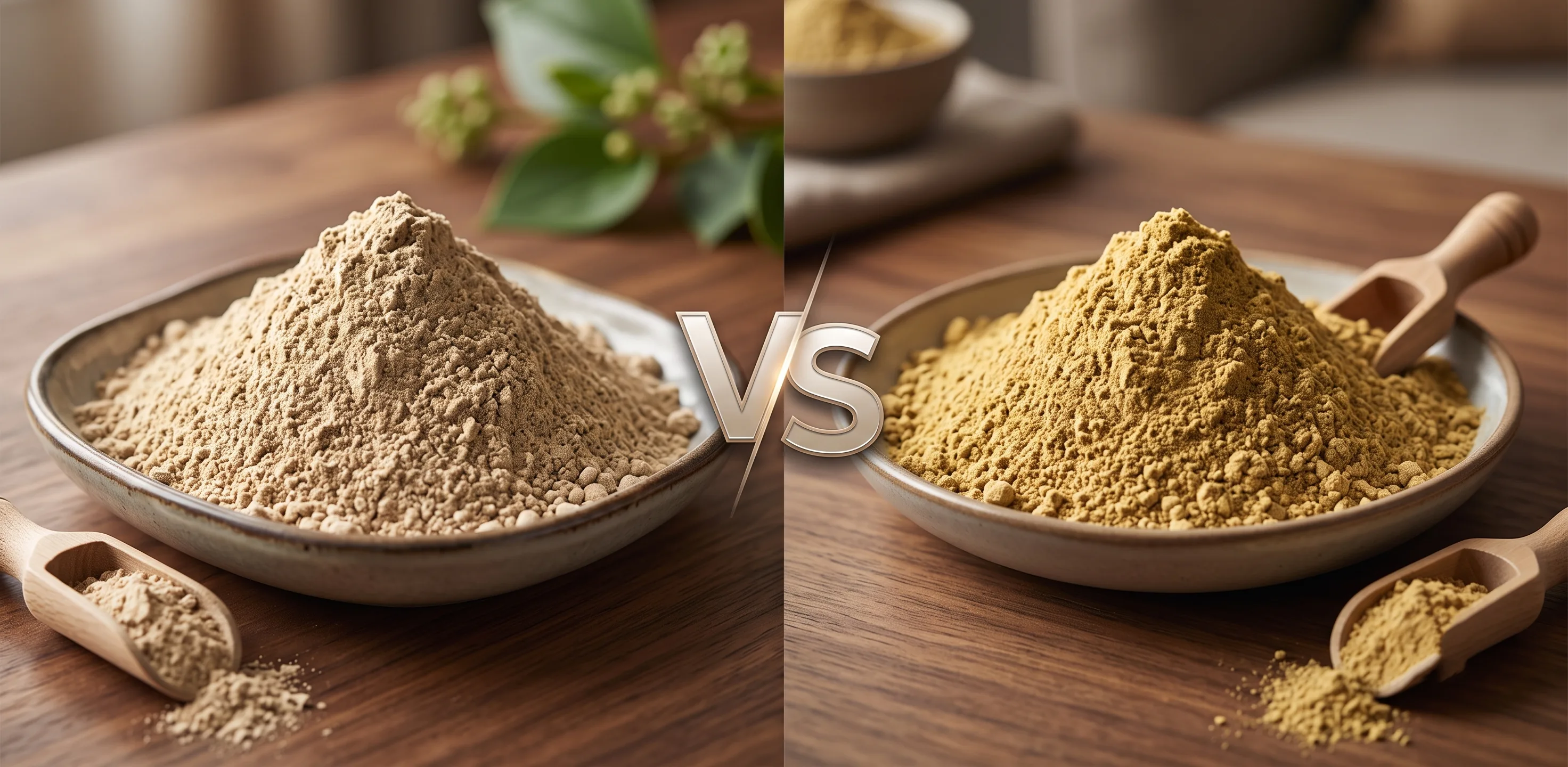
Kava and kanna are two plant-derived botanicals that have gained popularity in the natural wellness space for their calming and mood-related properties. While they are often discussed together, especially by people exploring alcohol alternatives, stress support, or social ease, these two herbs come from very different plants, traditions, and mechanisms of action and knowing the distinction is key when deciding which might better fit your lifestyle or routine.
This guide breaks down the origins, characteristics, differences, and popular uses of kava vs kanna, as well as how to understand each in the context of modern wellness.
What Is Kava?
Kava (scientific name Piper methysticum) is a plant native to the South Pacific islands, where its root has been traditionally prepared and consumed as a beverage during social and ceremonial gatherings for centuries.
The active compounds in kava are known as kavalactones, which are unique to the plant and are central to how its effects are described. As a botanical product, kava is widely used today in beverages, capsules, and other extract formats. Read about the effects and uses of kava by WebMD.
What Is Kanna?
Kanna (Sceletium tortuosum) is a succulent plant native to South Africa and has been used for centuries by Indigenous communities for emotional and mood-related purposes. Its traditional use included chewing, fermentation, and brewing to create plant preparations.
Modern consumers often find kanna available in capsules, powders, tinctures, and functional drinks, where it’s appreciated for its potential to support mood, emotional balance, and social ease. Read the complete guide on kanna by NIH.
Origins & Traditional Use
Feature | Kava | Kanna |
Native Region | South Pacific Islands | South Africa |
Traditional Use | Ceremonial root preparation | Chewed or brewed by Indigenous communities |
Plant Type | Shrub (root used) | Succulent plant |
Kava’s deep cultural history comes from communal rituals in places like Fiji and Vanuatu, while kanna’s heritage originates with the Khoisan people of South Africa.
How They Work
Kava
Kava’s effects are associated with kavalactones, which interact with the body in a way that many describe as promoting calm and physical relaxation. The effects of traditional kava beverages are typically described as a sense of tranquility and ease. Learn more with NIH.
Kanna
Kanna contains a group of alkaloids, including mesembrine, and is often discussed in terms of how it interacts with serotonin pathways in the brain. Many people describe kanna as providing a gentle lift in mood and emotional openness without sedation.
Key Differences: Kava vs Kanna
1. Botanical Source
Kava is derived from the root of Piper methysticum.
Kanna comes from the succulent plant Sceletium tortuosum.
2. Traditional Preparation
Kava is traditionally prepared by grinding and soaking the root to make a drink. Kanna was traditionally chewed, fermented, or made into teas.
3. Primary Actions
Kava’s active compounds are kavalactones, they are linked to calm and relaxation, while kanna’s alkaloids interact with serotonin pathways and are more often associated with mood uplift and clarity.
4. Duration & Onset
Some people report kanna’s effects as appearing more quickly and feeling lighter, while kava is often associated with a slower onset and more persistent body-centered calm.
5. Cultural Context
Kava has long ceremonial and social use in Pacific cultures. Kanna’s traditional use is rooted in South African plant lore.
Popular Modern Uses
Kava Products
Kava beverages (bars, ready-to-drink)
Capsules and tinctures
Powdered root extracts
Modern kava products tend to appeal to consumers, often in social settings or as part of evening routines. Read more about kava and their effects.
Kanna Products
Capsules
Powders
Tinctures and functional beverages
Kanna products are popular among individuals.
Note: Individual experience varies by product, form, and personal physiology.
Choosing Between Kava and Kanna
There isn’t a one-size-fits-all choice and the best option depends on your goals:
Choose kava if you’re interested in deep relaxation and calm
Choose kanna if you’re looking for mood uplift and social ease
Some people explore both kava and kanna depending on context, for example, kanna for daytime mood support and kava in evening routines.
Frequently Asked Questions
What is the difference between kava and kanna?
Kava is derived from a South Pacific root and traditionally consumed as a calming beverage, while kanna is a South African succulent historically chewed or brewed for mood support.
Are kava and kanna products available online?
Yes, many vendors sell kava and kanna products in forms like capsules, powders, and beverages. Quality and transparency vary.
Which is better for mood support?
People seeking mood lift and emotional clarity may lean toward kanna, while those seeking relaxation and calm often choose kava. Individual preferences vary.
Can you use kava and kanna together?
Some individuals explore combinations, but responses vary widely. When mixing botanical products, start with small amounts and monitor your experience.