

If you have been a Kratom enthusiast for a long now, then we bet you must have at least once tried, or heard about Red strain Kratom. Although it is one of the most popular Kratom strains available in the market today, people are still unclear about its varieties and characteristics.
From its distinct vein color, harvesting ad the way it's processed, there is so much more to red vein Kratom. So if you are also intrigued by red strain Kratom and wish to know more about them, then this guide might give a better insight into red Kratom.
What Is Red Vein Kratom? Understanding Red Strain Kratom
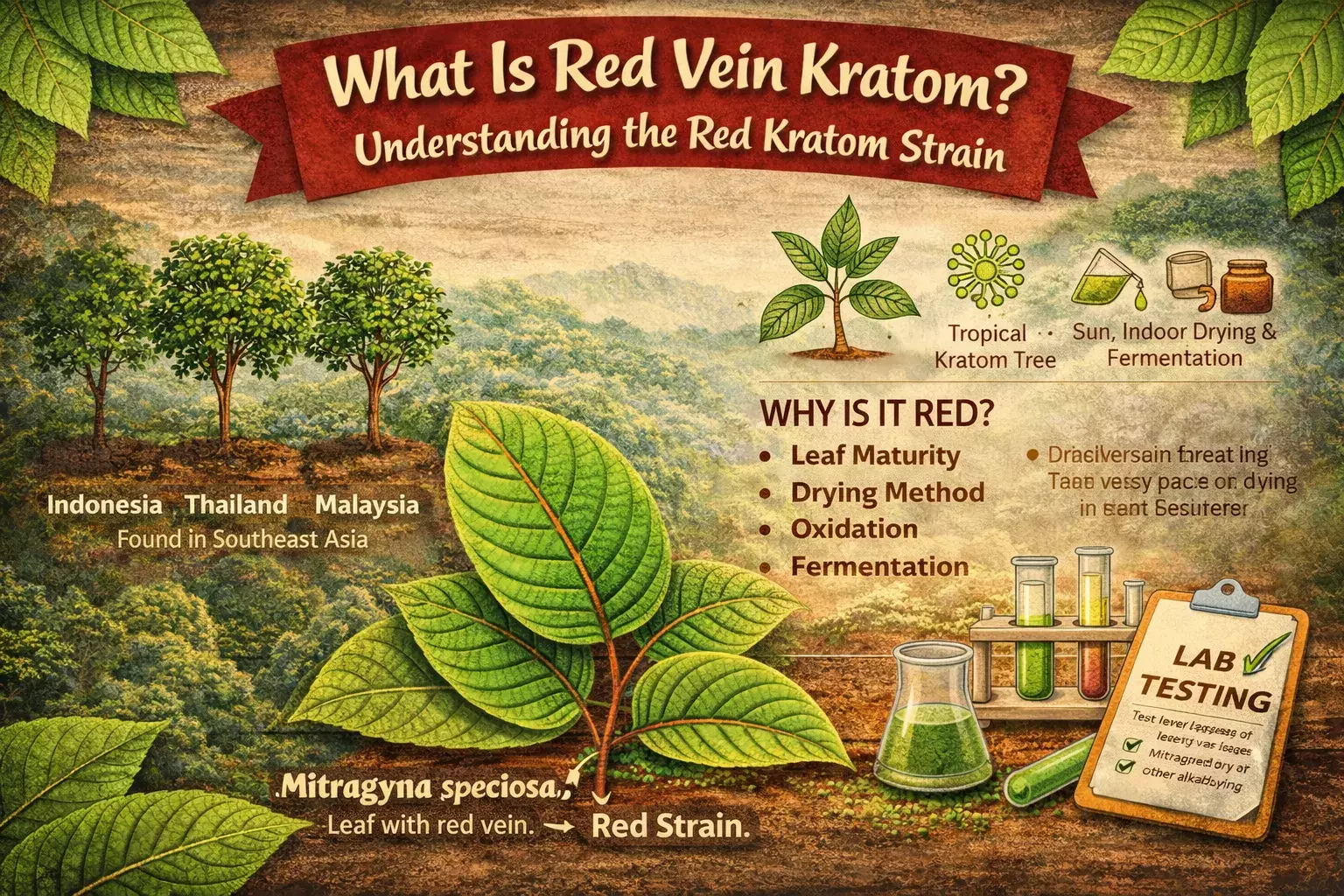
Red Kratom is a variety of the Mitragyna speciosa plant, a tropical tree native to Southeast Asia. These trees grow naturally in parts of Southeast Asia, especially Indonesia, Thailand, and Malaysia.
The word “red” refers to the color of the leaf’s vein at the time it’s harvested. As Kratom leaves mature, the vein color can change. When farmers select leaves with red veins, they are grouped and sold as red strains.
How Red Kratom Gets Its Color?
The “red” in red Kratom refers to the color of the main vein that runs through the center of the leaf. On the Mitragyna speciosa tree, leaves go through natural changes as they grow. Younger leaves often have lighter-colored veins, while more mature leaves can develop deeper shades, including red.
But the story doesn’t end at harvest. Post-harvest handling also plays a role in how the final product is classified.
👉 Here’s what influences the color:
|
Understanding Alkaloids In Red Kratom
Kratom leaves naturally contain active compounds known as alkaloids. These are plant-based substances found in many botanicals, including coffee and tea. In red Kratom, the most discussed alkaloids are Mitragynine.
👉 A few key points to understand:
Alkaloids occur naturally in the leaves of the Mitragyna speciosa tree.
Levels can vary depending on soil conditions, climate, harvest time, and drying methods.
No two batches are identical, even if they carry the same strain name.
Lab testing is often used by vendors to measure alkaloid content and ensure product consistency.
Red vein Kratom is popular for its wide range of strain varieties. From Red Maeng Da to Red Borneo,these strain varieties have their own unique district features.
Strain Names | Origin | Harvest Stage | Processing Style | Best For |
Red Maeng Da | Commonly sourced from Indonesia (name linked to Thai trade roots) | Mature leaves | Carefully sorted, controlled drying | Buyers looking for selectively processed batches |
Red Bali | Primarily Indonesia | Mature leaves | Traditional sun or indoor drying | Those who prefer widely available, easy-to-find options |
Red Borneo | Borneo (Indonesia/Malaysia region) | Mature leaves | Regional drying techniques | Buyers interested in region-specific sourcing |
Red Thai | Thailand or Thai-style exports | Mature leaves | Varies by exporter | Those exploring less common regional varieties |
Red Indo | Indonesia | Mature leaves | Standard regional preparation | Buyers seeking classic Indonesian red strains |
💡 Wish to know more about various red strains? You can read: Red Bali Vs Red Maeng Da Kratom Differences
Red Vein Kratom Regional & Specialty Strains
Vein color is only part of the story. Red Kratom strains are also grouped by region and style of preparation. Many strain names reflect where the leaves are grown or how they are handled after harvest. Climate, soil conditions, and local drying techniques can all contribute to small differences between batches.
👉 Here are some commonly known red vein varieties:
Red Maeng Da: Originally linked to Thailand, this name is now used for carefully selected, well-processed red leaves. The term “Maeng Da” often signals a higher-grade sorting process rather than a separate plant type.
Red Bali:Despite the name, most Red Bali products are sourced from Indonesia. The label typically refers to a specific regional style of harvesting and drying.
Red Kalimantan:Named after the Indonesian region of Kalimantan (part of Borneo). This variety reflects leaves grown and prepared in that area.
🌿 Most Popular Forms Of Red KratomRed vein Kratom is available in many forms. Here are some most popular forms: 1. Red Kratom Powder: Made from the finely ground Kratom leaves. This is the most widely available format and is often used for mixing with beverages. 2. Red Kratom Capsules: Pre-measured powder filled into capsules for convenience and easy portability. 3. Red Kratom Extract: A concentrated form made by processing Kratom leaf to increase alkaloid content. Available in liquid or solid formats. |
Red Vs Green Vs White Kratom: What’s The Difference?
Although red, white, and green Kratom all come from the same plant (Mitragyna speciosa), they are grouped based on vein color and post-harvest processing. Here’s how they differ:
Factors | Red Kratom | Green Kratom | White Kratom |
Origin | Southeast Asia (Indonesia, Thailand, Borneo) | Southeast Asia (Indonesia, Thailand, Malaysia) | Southeast Asia (Indonesia, Thailand, Borneo) |
Vein Color | Red-colored leaf veins | Green-colored leaf veins | White/light-colored leaf veins |
Leaf Maturity | Typically mature leaves | Mid-maturity leaves | Younger leaves |
Drying Process | Longer drying or fermentation methods | Balanced drying process | Shorter drying, minimal fermentation |
Powder color | Deep green to reddish-brown | Bright to olive green | Light green to pale tone |
Alkaloid Balance | Heavier alkaloid ratio | Balanced alkaloid ratio | Lighter alkaloid ratio |
Common Formats | Powder, capsules, extracts | Powder, capsules, extracts | Powder, capsules, extracts |
Strain Varieties | Red Bali, Red Maeng Da, Red Borneo, Red Thai, Red Sumatra | Green Maeng Da, Green Malay, Green Borneo, Green Thai | White Maeng Da, White Borneo, White Thai, White Sumatra |
Beginner-Friendly | ✔️ | ✔️ | ❌ |
💡 While they come from the same plant, their origin, maturity, and drying methods create noticeable differences in overall profile and characteristics. To know more about how they differ, you can read: Red vs Green vs White Kratom: Differences & Benefits.
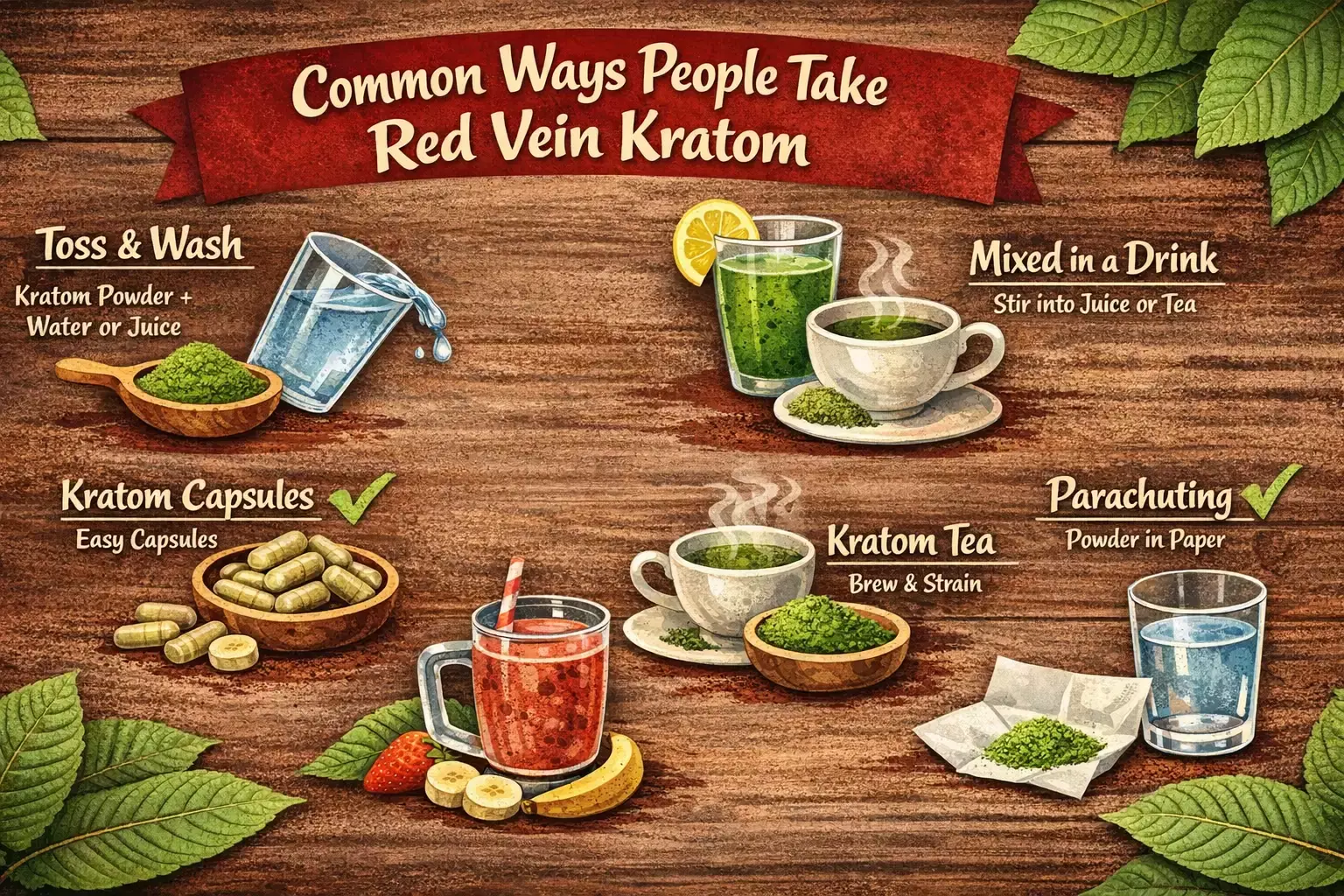
Common Ways People Take Red Vein KratomBelow are some common ways in which people like to enjoy the benefits of Kratom red strain: 🌿 Toss and Wash (Powder): Place a measured amount of powder in the mouth and wash it down with water or juice. 🥛 Mixed in a Drink:Stir the powder into water, juice, or tea to make it easier to take. 💊 Capsules: Pre-filled capsules are swallowed with water for a simple, no-prep option. ☕ Kratom Tea: Simmer the powder in hot water, strain the liquid, and drink once cooled slightly. 🥤 Blended into Smoothies: Add the powder to a smoothie to help balance its natural bitterness ✔️ Parachuting: Wrap a small amount of powder in thin paper (like edible film or tissue) and swallow it with water. |
💡 To know more about how and why people use red Kratom, you can read – What Is Red Kratom Used For? Ultimate Guide
7 Tips To Choose High-Quality Red Kratom Products
Now that you know all about red Kratom, let’s help you choose the best red Kratom products:
👉Check the vendor’s transparency: Reliable sellers clearly list sourcing details and basic product information.
👉Look for third-party lab reports: A recent Certificate of Analysis (COA) shows the batch was tested for content and contaminants.
👉Review batch details: Fresh batches are usually labeled with lot or batch numbers.
👉Notice the powder appearance:It should look fine and evenly ground, without clumps or excess moisture.
👉Read real customer feedback: Consistent reviews often say more than marketing claims.
👉Avoid unrealistic claims: Be cautious of products advertised with exaggerated promises.
👉Check packaging quality:Sealed, airtight packaging helps maintain freshness.
Key Takeaways On Red Kratom
Red strain Kratom comes from the Mitragyna speciosa tree grown in Southeast Asia.
The “red” label refers to the color of the leaf’s central vein at harvest.
Leaf maturity and drying methods influence how red strains are classified.
All vein colors come from the same plant species — they are not different plants.
Alkaloids like mitragynine occur naturally in the leaves and can vary by batch.
Lab testing helps confirm content and maintain product consistency.
Questions You May Ask As A Red Kratom User
Where Can I Buy Red Kratom Products?
Red Kratom products are widely available on both offline stores and online vendors. But if you are unsure about buying from smoke shops or convenience stores, you can always switch to better online vendors like MIT Therapy. Most reputed brands have red vein Kratom powder or capsules in stock.
Which One Should I Choose Between Red And Green Kratom?
Choosing between red vs green Kratom comes down to your personal preference. Both come from the same plant, but they’re grouped based on vein color and processing. So if you are unsure, you can try both of them and understand which fits you the best. 💡 You can also read: Red vs Green Kratom: Find the Right Strain
Is Red Kratom Stronger Than Other Vein Colors?
Not necessarily. The strength of red strains can vary from batch to batch, regardless of color. Many factors like harvest timing and processing methods often matter more than the vein color alone.
Is Red Kratom Legal In My State?
Kratom is legal at the federal level in the U.S., but some states and cities have restrictions. It’s best to check your local laws before buying. Before you shop for any red Kratom product, don’t forget to check the Kratom Summary Of State Laws.
Which Red Strain Should I Choose As A Beginner?
If you are starting your journey with a red strain, then it’s best that you go for lighter options like – Red Bali, Red Borneo or Red Indo strains.
Disclaimer: This article is provided for informational purposes only. It is not intended to diagnose, treat, cure, or prevent any condition. Kratom products are not approved by the U.S. Food and Drug Administration (FDA), and their safety has not been fully evaluated.
Laws and regulations regarding kratom vary by state and country. It is your responsibility to review local regulations before purchasing or possessing any kratom product. Always follow the guidance provided on the product label and consult a qualified professional if you have questions about suitability.