
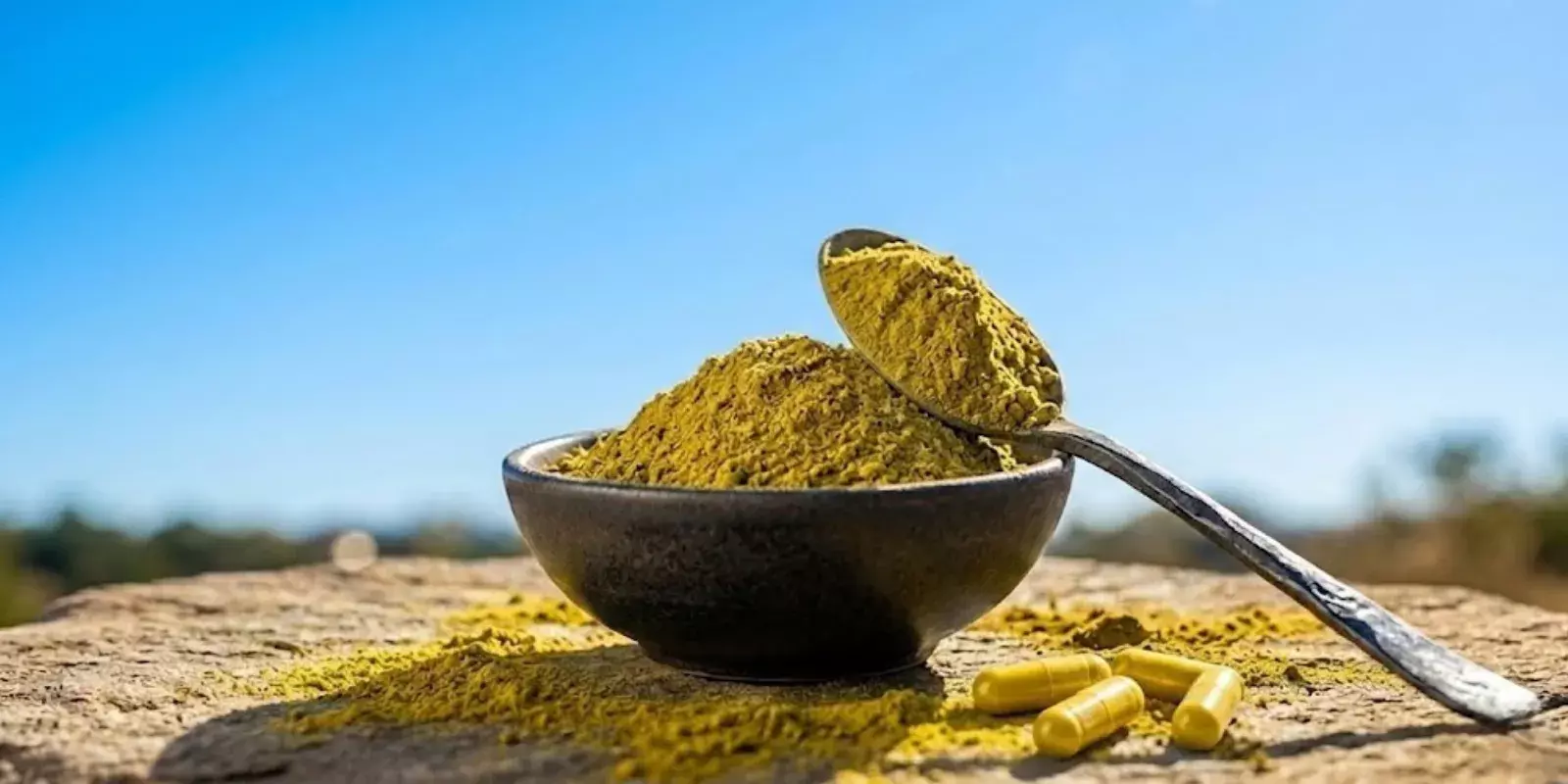
Yellow Kratom is a strain that often strikes curiosity amongst users. Many people pause and wonder where does Yellow Kratom come from? What is Yellow Kratom good for? Or is this a real Kratom strain?
Yellow vein Kratom does not match the familiar patterns of Green and Red and White strains because its first appearance in stores and online stores creates confusion for customers. That is exactly why this guide is here to help you! By the end of this blog, you will get a clear picture of the Yellow Kratom strain.
Yellow Kratom: Alkaloid Profile & Appearance
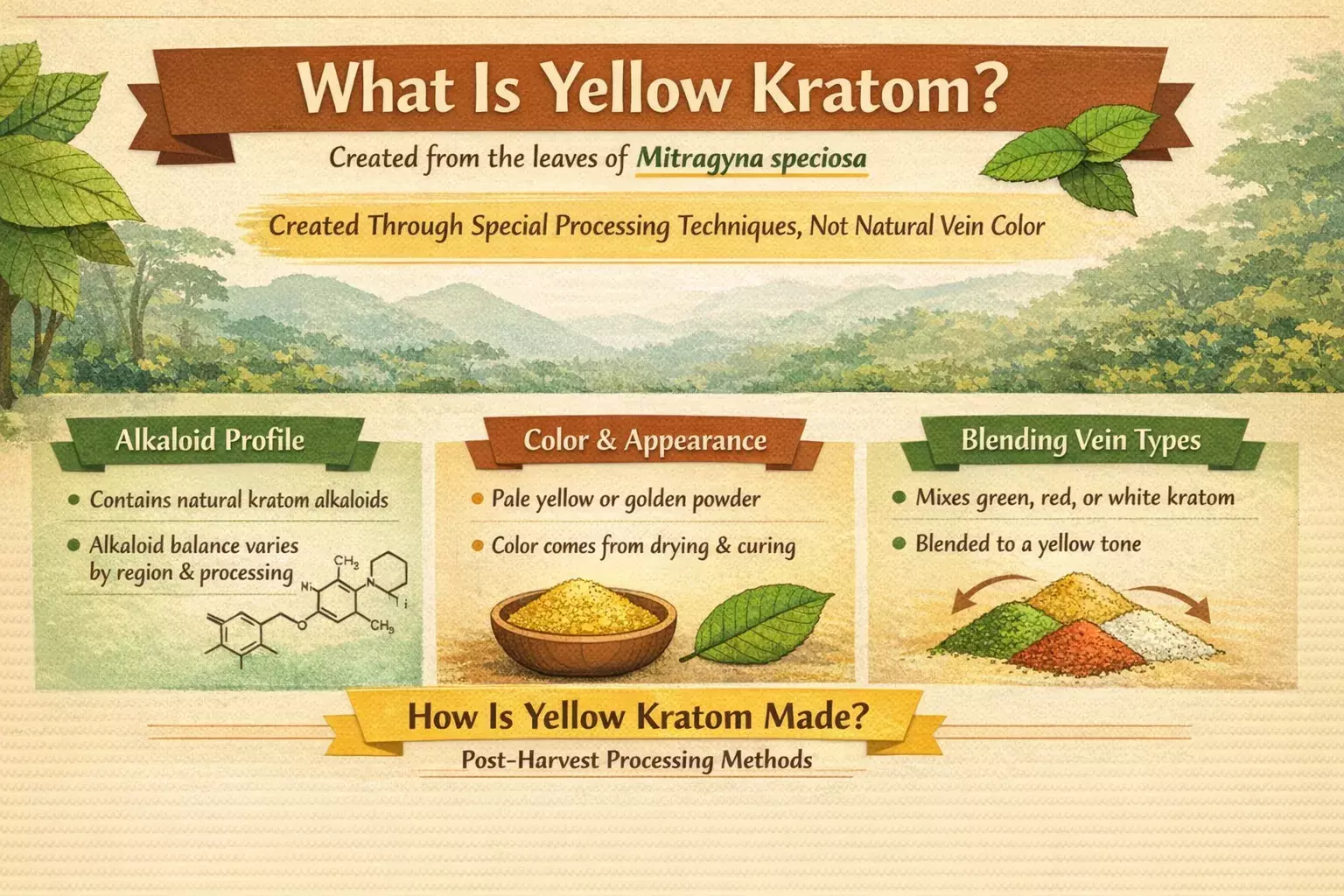
Yellow Kratom is a type of Kratom made from the leaves of the Mitragyna speciosa, a Southeast Asian tropical tree. Unlike Red, Green, or White Kratom, Yellow Kratom does not come from a naturally occurring vein color. Instead, it is created through special drying, fermentation, or blending techniques applied to harvested Kratom leaves.
Alkaloid Profile
Like all Kratom types, Yellow Kratom contains naturally occurring alkaloids found in Mitragyna speciosa leaves.
The exact alkaloid balance can vary depending on factors such as the region where the Kratom was grown, leaf maturity, and processing techniques used after harvesting.
Yellow Kratom is produced using unique processing techniques. It may directly affect the final alkaloid composition.
Color and appearance
Yellow Kratom is often described as having a pale yellow, golden, or yellowish powder color.
Its appearance usually comes from the curing or drying style rather than from a naturally yellow leaf vein.
How Is Yellow Kratom Made?
Yellow Kratom is not created from a naturally yellow-veined leaf. It rather depends on the post-harvesting and processing techniques.
Although methods often change between vendors, most yellow Kratom products are made through one of the following standard methods:
1. Extended Drying Process
After harvesting, Kratom leaves are often dried for longer periods under sunlight or controlled environments.
This extended drying process changes the color of the leaves and influences their alkaloid composition.
During this stage, natural compounds in the leaves undergo subtle chemical transformations, resulting in the distinctive yellowish tone.
2. Fermentation Techniques
Some producers allow the leaves to ferment for 24–72 hours before final drying.
This fermentation step further modifies the alkaloid profile and contributes to the golden color seen in yellow Kratom products.
Fermentation is one reason yellow Kratom may feel different from conventional Kratom strains.
3. Blending Different Vein Types
Another common method involves mixing two or more Kratom vein colors, such as green and white or red and green.
The blend is then dried or fermented to produce a yellow-toned powder.
As there is no single standardized recipe, different farms may produce slightly different versions of yellow Kratom.
Key Differences – Red, Green, White Vs Yellow Kratom
Wondering what makes Yellow vein Kratom different from other strains? Let’s take a look at their core differences:
Features | Yellow Kratom | |||
Origin | Can come from multiple regions, such as Bali, Borneo, or Sumatra, but processed differently | Commonly sourced from regions like Bali, Borneo, and Thailand | Often sourced from regions like Vietnam, Malaysia, and Indonesia | Commonly sourced from Thailand, Indonesia, and other Southeast Asian areas |
How It Is Made | Created through special drying, fermentation, or blending techniques after harvesting | Made from mature leaves with naturally red veins | Harvested from leaves with green veins at mid-maturity | Derived from younger leaves with naturally white veins |
Alkaloid composition | Can vary based on processing and leaf source | Naturally contains Kratom alkaloids; profile varies by harvest | Naturally contains Kratom alkaloids; profile varies by source | Naturally contains Kratom alkaloids; overall profile may vary |
Color Of Powder | Golden or yellowish shade depending on processing | Dark red or reddish-brown powder | Bright green powder | Light green or pale powder |
Processing Method | Often involves extended drying, fermentation, or mixing different vein types | Usually dried indoors or through fermentation | Typically dried under controlled sunlight | Often dried quickly indoors or outdoors to preserve lighter color |
👉Wish to compare other varieties with Yellow Kratom? Try out these Kratom products:
MIT Therapy Green Hulk + Yellow Kong 90ct
MIT Therapy Green Hulk + Yellow Kong – 500g
Crowd’s Favorite Yellow Kratom Varieties
Yellow Kratom is not a naturally occurring vein type, so many yellow strains are created through specialized drying, fermentation, or blending methods. Take a look at the 5 most popular yellow-vein varieties:
1. Yellow Maeng Da
Yellow Maeng Da is a specialised blended Kratom strain.
Yellow Maeng Da is usually a mix, generally made up of around 80% White Vein Kratom and 20% Red Vein Kratom. The "yellow" hue is obtained through a distinct drying, fermentation, or curing method of these leaves, which often includes sun exposure (outdoor drying) for a longer duration than other strains.
2. Yellow Borneo Kratom
Yellow Borneo is made using Kratom leaves sourced from the island of Borneo in Southeast Asia.
After harvest, the leaves undergo specific drying or fermentation techniques that help produce the golden-yellow color associated with this variety.
3. Yellow Sumatra
Yellow Sumatra is produced using Kratom leaves harvested from the tropical forests of Sumatra.
Yellow Sumatra is made using a distinctive drying and fermentation technique, typically applied to premium Green or Red leaves.
4. Yellow Thai
Yellow Thai is made from Kratom leaves sourced from Thailand.
After harvesting, producers apply specialized post-harvest techniques such as extended drying or controlled fermentation to achieve the yellow tone.
5. Yellow Bali
Yellow Bali originates from Kratom leaves grown in Bali, Indonesia.
Although it carries the name of Bali, this strain is generally grown in Indonesia. The "yellow" hue results from a unique curing method (often involving fermentation) that changes the alkaloid composition of the leaves.
Other Yellow Kratom Varieties
Other than the above-mentioned popular varieties, there are more yellow-vein options available in the market:
Yellow Vietnam Kratom
Yellow Sunda
Yellow Indo
Yellow Malay
Yellow Hulu Kapuas
Yellow Horn
Common Forms Of Yellow Kratom
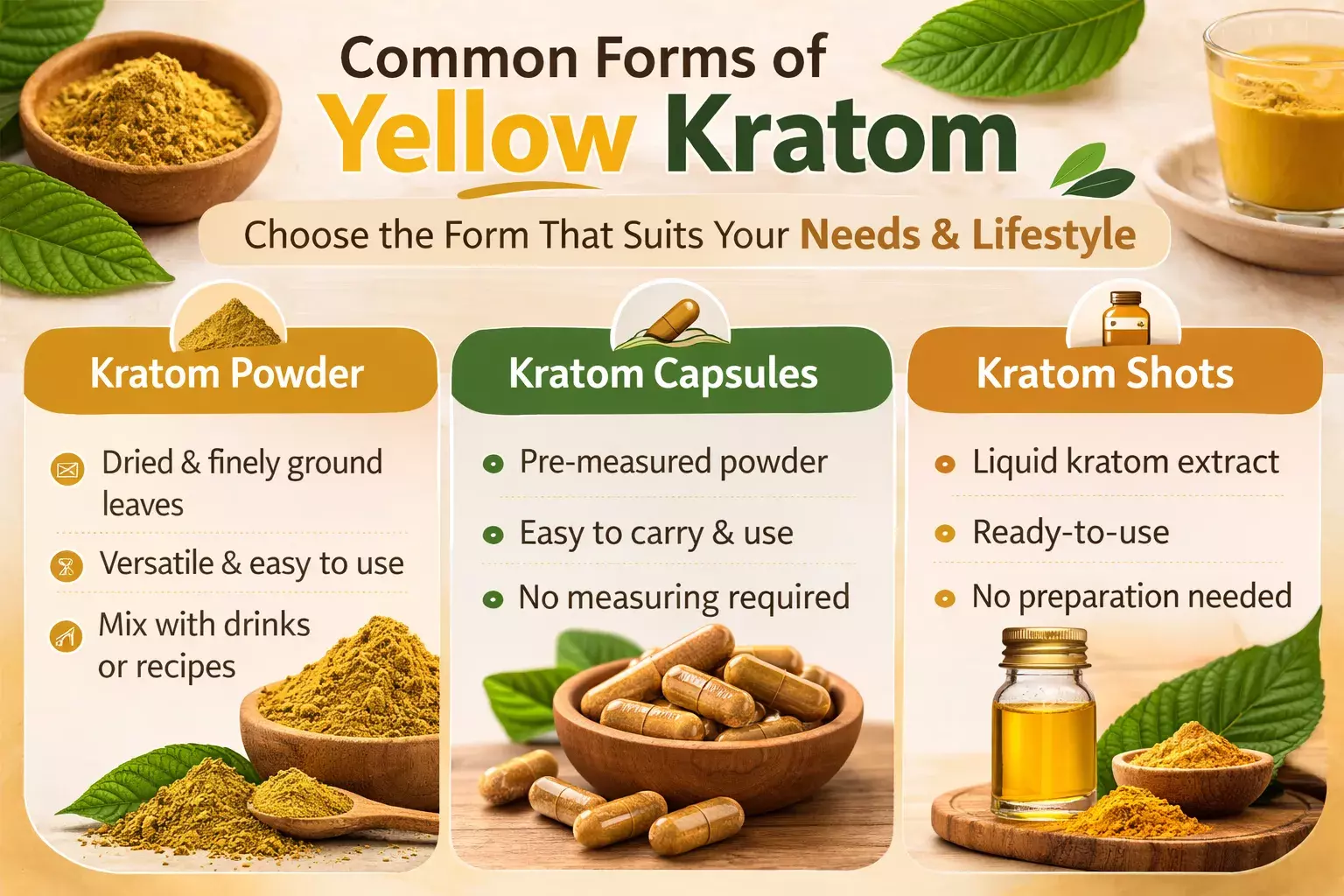
Yellow Kratom is available in several product formats, allowing consumers to choose the option that best fits their preferences and convenience.
Kratom Powder
Yellow Kratom powder is one of the most widely available forms.
It is made by drying Kratom leaves and grinding them into a fine powder.
This format is commonly chosen because it is versatile and can be used in multiple ways, such as mixing with beverages or incorporating into different preparation methods.
Kratom Capsules
Capsules contain pre-measured yellow Kratom powder enclosed in gelatin or plant-based shells.
This format is often preferred by those who want a convenient and mess-free option.
Kratom Capsules also make it easier to manage portions without needing to measure powder.
Kratom Shots
Liquid Kratom shots are another format available in the market.
These are typically small bottled products that contain Kratom extract in liquid form, offering a ready-to-use option without additional preparation.
Myths Vs Facts About Yellow Vein Kratom
The Yellow Kratom strain has too many questions behind it. Below are some common myths and facts that might help you get a better insight into this strain:
❌Myth | ✔️Facts |
Yellow Kratom comes from a naturally yellow-veined leaf | Yellow Kratom is not usually considered a natural vein color. It is generally linked to post-harvest methods like drying, fermentation, or blending. |
Every Yellow Kratom product is made the same way | There is no single standard method used to make Yellow Kratom. The process can vary from one vendor to another. |
Yellow Kratom is a completely different plant type | Yellow Kratom still comes from the same plant, Mitragyna speciosa. The difference usually comes from processing, not from a separate species. |
Names like Yellow Borneo or Yellow Vietnam always confirm the exact origin | These names may reflect regional labeling, vendor naming, or product style. They do not always guarantee a fixed origin. |
All Yellow Kratom products have the exact same alkaloid profile | The alkaloid profile can vary based on leaf source, maturity, and processing method. |
💡 Pro tip! You can always read authentic Reddit users' reviews and customer feedback to know more about the Yellow Kratom strain.
Yellow Kratom Vs Gold Kratom: How It Differs?
Yellow and gold kratom are not natural vein colors and are generally understood as processing-based categories rather than fixed botanical strains.
Feature | Yellow Kratom | Gold Kratom |
What it represents | Processing style (drying, curing, or blending) | Processing style (often fermentation + drying or blending) |
Natural vein color | No | No |
How it’s made | Extended drying, curing, or mixed vein batches | Often fermented or specially cured blends |
Powder color | Pale yellow to yellowish | Golden to yellow-gold |
Standardization | Varies by vendor | Varies by vendor |
Quick takeaway: Both are vendor-defined categories, and differences mainly come from post-harvest processing methods rather than distinct plant types.
Is Yellow Kratom Legal? Understanding The Legal Aspects
The legality of yellow Kratom largely depends on where you live. Here is a simple breakdown to understand its legal status:
✔️ Countries Where Kratom Is Legal Or Partially Regulated
In several regions, Kratom products — including yellow Kratom — are legal to buy and possess. However, they may still be regulated as herbal or botanical products.
✔️ Places With Restrictions
Some countries, states, or cities have placed specific restrictions or bans on Kratom. In these locations, selling, purchasing, or possessing Kratom products may not be allowed.
✔️ Laws Can Change Over Time
Kratom regulations are still evolving in many parts of the world. Governments may introduce new rules or modify existing laws as more research becomes available.
✔️ Always Check Local Regulations
Before purchasing yellow Kratom, it’s a good idea to check the Kratom summary of state laws before buying any yellow Kratom product.This helps ensure that you are following the local regulations.
Disclaimer: This blog is meant for general informational purposes only and should not be taken as medical, legal, or professional advice. Yellow Kratom products may vary in processing, composition, and labeling depending on the source. Laws related to kratom can also differ by location and may change over time. Readers are encouraged to do their own research and review local regulations before making any purchase decision.