
Some Kratom strains are easy to explain at first glance, but Yellow Borneo tends to spark a second look. Its name hints at something familiar, yet the “yellow” part often leaves readers wondering what makes it different from the usual red, green, or white varieties. That curiosity is exactly why this strain stands out.
From the way it is described to the way it stands beside other strains, Yellow Borneo gives readers plenty to question, compare, and understand before forming a clear picture. This guide is exactly what a yellow-vein user might be searching for! So if you are also curious about Yellow Borneo and its hidden characteristics, come along!
What Is Yellow Borneo Kratom?
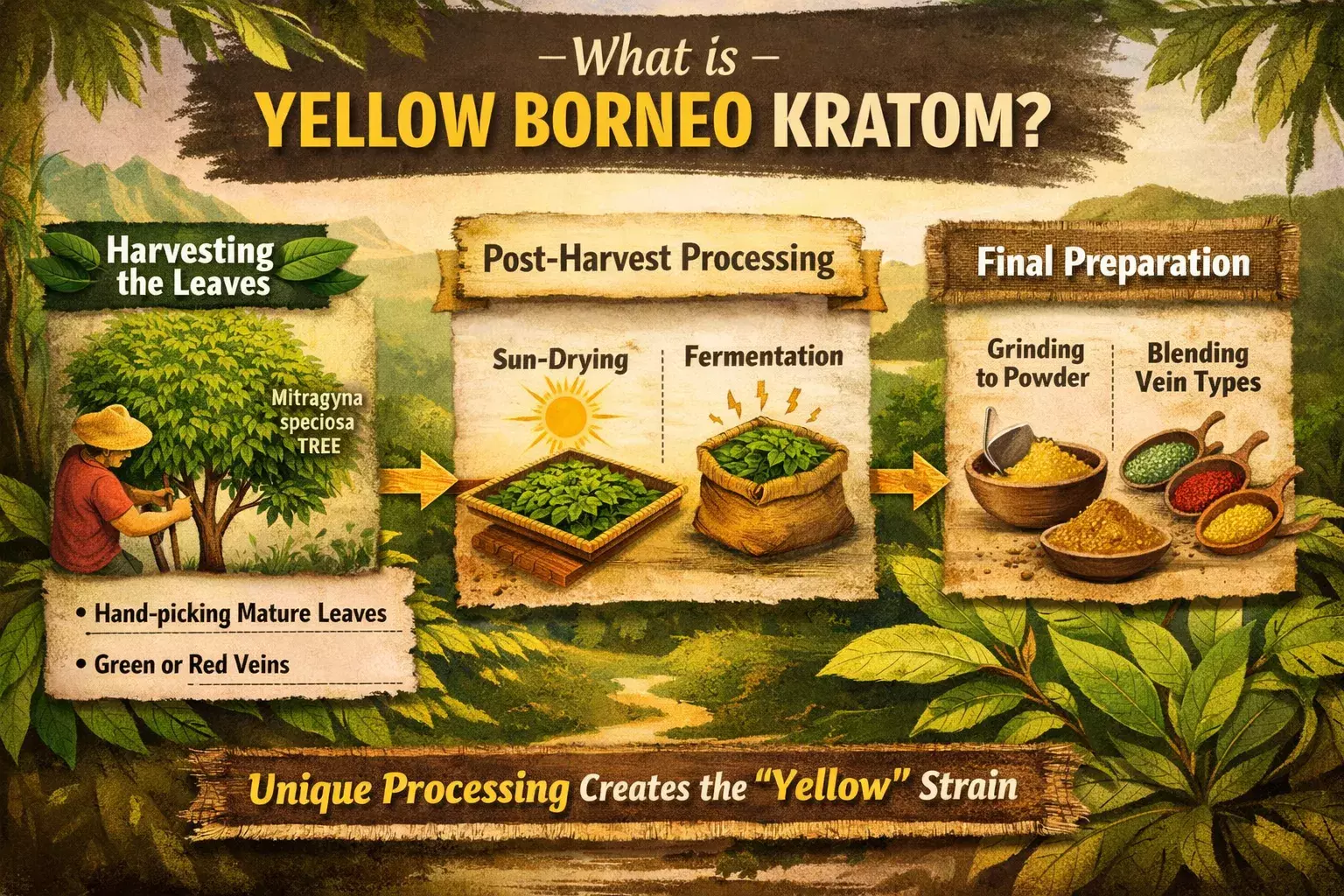
Yellow Borneo Kratom is a commercial strain name used for kratom products associated with the Borneo region of Southeast Asia. It comes from the leaves of the Mitragyna speciosa tree. The term “yellow” does not refer to the leaf’s natural vein color. Instead, it is commonly used to describe a product shaped by specific post-harvest drying and processing methods.
Alkaloid Profile Of Yellow Borneo Kratom
Mitragynine is the main compound, supported by small amounts of other natural trace alkaloids.
The overall alkaloid profile of Yellow Borneo is shaped by the extended drying and oxidation process.
Additionally, the drying and fermentation of yellow strains may increase the presence of Speciogynine and Paynantheine.
Color And Aroma
Color: Appears as a yellowish-brown powder, with slight variations depending on the drying and processing method.
Aroma: Has a mild, earthy scent with subtle herbal notes that are not too strong or overpowering.
The Process Behind Yellow Borneo Kratom
Yellow Borneo Kratom is not identified by a naturally yellow vein color. Instead, the name is commonly linked to how the leaves are handled after harvest. Because processing methods are not standardized across the kratom market, the exact approach can vary from one vendor to another. Still, Yellow Borneo is generally described through a few common stages:
Stage 1: Leaf Harvesting
The process begins with leaves taken from the Mitragyna speciosa tree. Products labeled "Yellow Borneo" are usually associated with the Borneo region of Southeast Asia.
At this stage, the leaves are not naturally yellow, and the final product name is not based solely on vein color.
Stage 2: Initial Post-Harvest Handling
Once the leaves are harvested, they move into the post-harvest stage. This is where Yellow Borneo starts to take on its distinct identity.
Instead of relying on a natural leaf trait, producers commonly use post-harvest handling methods to shape the final product.
Stage 3: Withering and Drying
The next stage usually involves withering and careful drying. Depending on the producer, this may include sunlight drying, shade drying, indoor air-drying, or extended drying periods.
These conditions are often considered one of the main factors behind the yellowish-brown appearance commonly seen in Yellow Borneo powder.
Stage 4: Optional Curing or Fermentation-Style Processing
Some producers also describe an added curing or fermentation-style step as part of the process. This may involve controlled storage, moisture management, or longer post-harvest handling.
Since these methods vary across vendors, Yellow Borneo does not have a single, exact production formula that everyone follows.
Stage 5: Grinding the Leaves
After the leaves are fully processed, they are crushed and ground into a fine powder. This is the stage at which the processed material takes on the form most buyers recognize as Yellow Borneo Kratom.
Stage 6: Final Preparation and Packaging
In the last stage, the powder is prepared for packaging and sale. Some sellers offer it as a standalone processed product, while others may market it according to their own handling method or blend style.
Because of this, slight differences in color, texture, and overall presentation can appear from one product to another.
Different Ways To Enjoy Yellow Borneo Kratom
Looking for ways to enjoy the benefits of Kratom in your favorite Borneo strain? Take a look at how you can make the best use of it:
1. Kratom Powder
Yellow Borneo Kratom powder is the most traditional and widely available form.
Finely ground from dried leaves.
Kratom powder can be mixed into water, juice, or smoothies.
Allows flexible serving sizes.
👉 Best for: Users who want versatility and don’t mind the natural taste.
2. Kratom Capsules
Yellow Borneo Capsules contain pre-measured Kratom powder in an easy-to-swallow form.
No need to measure or prepare.
Kratom capsules are convenient and a great on-the-go use option.
Consistent portion in each capsule.
👉 Best for: Convenience, portability, and avoiding the bitter taste.
3. Kratom Tea
Kratom can also be brewed into a tea for a more traditional experience.
Made by steeping powder or crushed leaves in hot water.
Kratom tea can be customized with honey, lemon, or other flavors.
Offers a smoother, more gradual experience.
👉 Best for: Those who enjoy a warm, soothing routine
Yellow Borneo Vs Other Borneo Kratom: What’s The Difference?
Let’s simplify it—here’s how Yellow Borneo compares to other Borneo strains at a glance.
Features | Yellow Borneo 🟡 | Red Borneo 🔴 | Green Borneo 🟢 | White Borneo ⚪ |
Vein Color | Not natural (processed) | Natural red vein | Natural green vein | Natural white vein |
How It’s Made | Specialized drying / optional fermentation / sometimes blended | Standard drying of mature leaves | Balanced drying process | Faster drying, often indoors |
Color of Powder | Yellowish-brown | Deep red/brown | Green | Light green |
Overall Profile | Balanced (middle-ground) | Traditionally heavier profile | Balanced profile | Traditionally lighter profile |
Processing Role | Key defining factor | Minimal processing changes | Moderate processing | Minimal processing |
Consistency | Can vary by vendor | More consistent | More consistent | More consistent |
Best For | Those exploring processed varieties | Those preferring traditional red vein options | Those looking for a balanced traditional strain | Those exploring lighter, traditional options |
Yellow Borneo Vs Other Popular Yellow Strains
Still wondering if all Yellow Kratom strains are the same? Let’s break through and see the clear differences:
Features | Yellow Borneo | Yellow Vietnam | Yellow Maeng Da |
Origin | Borneo (Indonesia) | Vietnam | Originally from Thailand now in Indonesia |
Strain Color | Not natural (processed from green/red leaves) | Not natural (processed) | Not natural (processed blend) |
Alkaloid Profile | Moderately balanced, depends on processing | Can vary between batches | Often standardized through blending |
How It’s Made | Extended drying, oxidation, and sometimes light fermentation | Similar drying methods; varies by producer | Carefully selected leaves + specialized processing |
Color & Aroma | Yellowish-brown, earthy aroma | Pale yellow to golden, slightly herbal aroma | Rich golden tone, more refined aroma |
Best Suited For | Those exploring region-based yellow varieties | Those trying less common yellow options | Those looking for a crafted/blended yellow style |
💡 You can read these related blogs to get a better insight about Kratom strains:
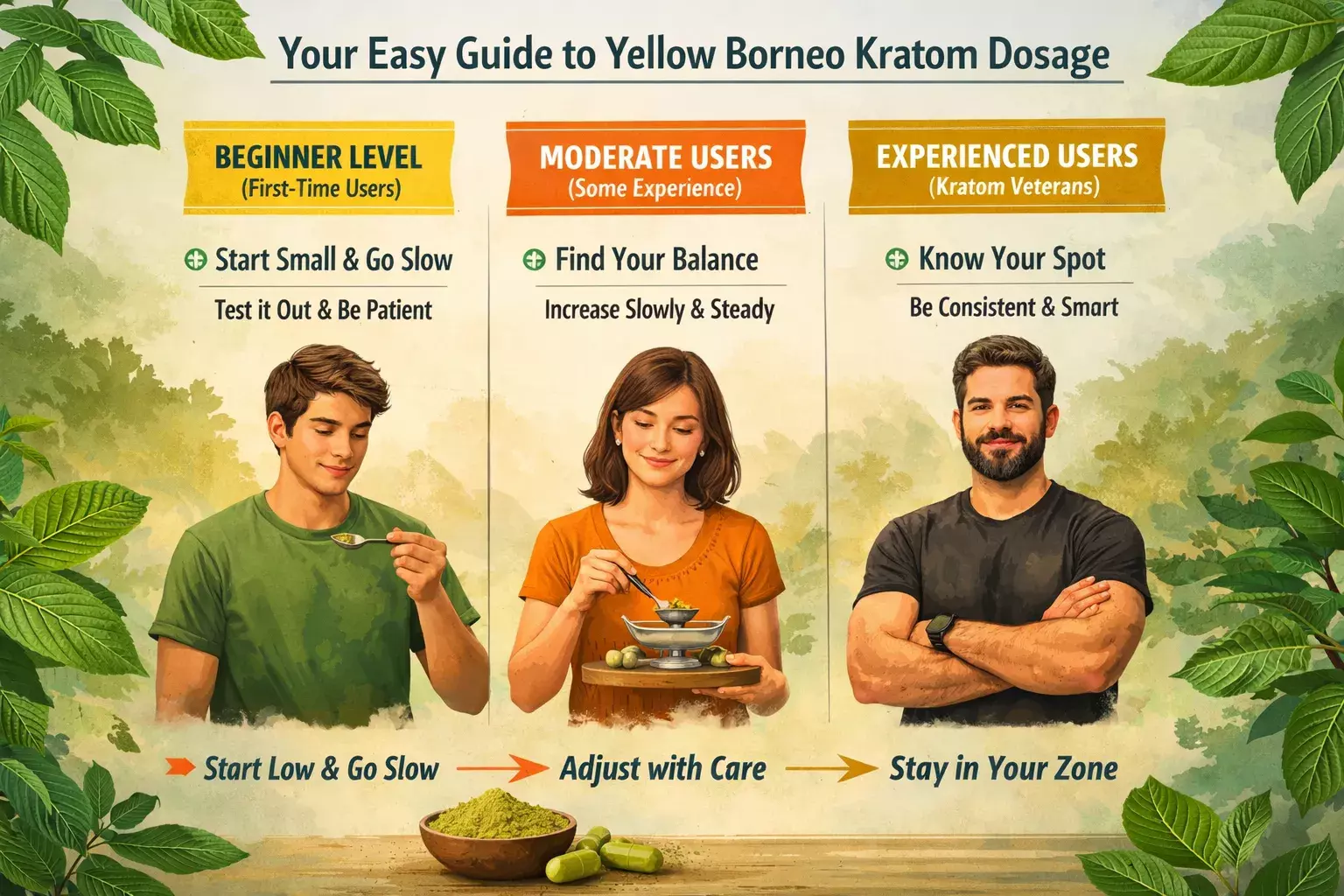
Your Easy Guide To Yellow Borneo Kratom Dosage
Not sure where to start and how much to take? Here’s your go-to guide:
Beginner Level (First-Time Users)
If you’re new, keep it light.
Start with a small amount to see how your body reacts.
Give it some time before considering more.
👉 Think of this as your “testing phase”—less is more here.
Moderate Users (Some Experience)
Once you’re familiar with it, you can slowly increase your intake.
You may try a slightly higher amount than before.
Still keep things balanced—no need to rush.
👉 This stage is about finding your comfort zone.
Experienced Users
If you’ve used Kratom before and understand your tolerance:
You might go for a more noticeable amount.
Consistency matters more than increasing further.
👉 At this level, it’s about staying within your personal sweet spot, not pushing limits.
Is Yellow Borneo Kratom Your Perfect Match?
If you’re wondering whether Yellow Borneo fits your vibe, here are a few types of users who often lean toward it:
⭐New or exploring users: If you’re just getting familiar with different Kratom varieties, this one often feels like an easy and approachable option.
⭐Those who prefer a balanced profile: Great for people who don’t want something too strong or too mild—just something that sits comfortably in between.
⭐Curious about processed strains: If you’re interested in how drying and processing methods change a strain’s character, Yellow Borneo is a solid one to explore.
FAQs About Yellow Borneo Kratom
Is Yellow Borneo Kratom Good?
Yellow Borneo is generally considered one of the most used yellow-vein strain varieties. You can read a few of the Yellow Borneo Kratom reviews or feedback available online before purchasing.
Is Yellow Borneo Legal?
The legality of Kratom strains, including yellow borneo, depends on the state or city you live in. Kratom laws vary by country and region, so it’s best to check your local regulations before buying.
Is Yellow Borneo Stronger Than Green Borneo?
No, Yellow Borneo is generally not considered stronger than Green Borneo. In fact, Yellow Borneo is often described as a milder, more balanced strain, while Green Borneo is known for being a more potent and stronger strain.
Where Can I Buy Yellow Kratom Products Online?
Many popular Kratom vendors like MIT Therapy carry yellow Kratom products. Always remember to shop from trusted vendors who provide high-quality products.
Is Yellow Borneo The Same As Gold Kratom?
No, they’re different. Both are processed strains, but they use different techniques, giving them distinct characteristics.
Disclaimer: This blog is for informational purposes only and should not be treated as medical, legal, or professional advice. Kratom products, including Yellow Borneo Kratom, are not approved by the FDA to diagnose, treat, cure, or prevent any disease. Product quality, processing methods, and user experiences may vary from one vendor to another.
Always read the product label carefully, follow the manufacturer’s directions, and consult a qualified healthcare professional before trying any new botanical product. Keep kratom products out of reach of children and avoid use if pregnant, nursing, or taking medications unless advised otherwise by a medical professional.