
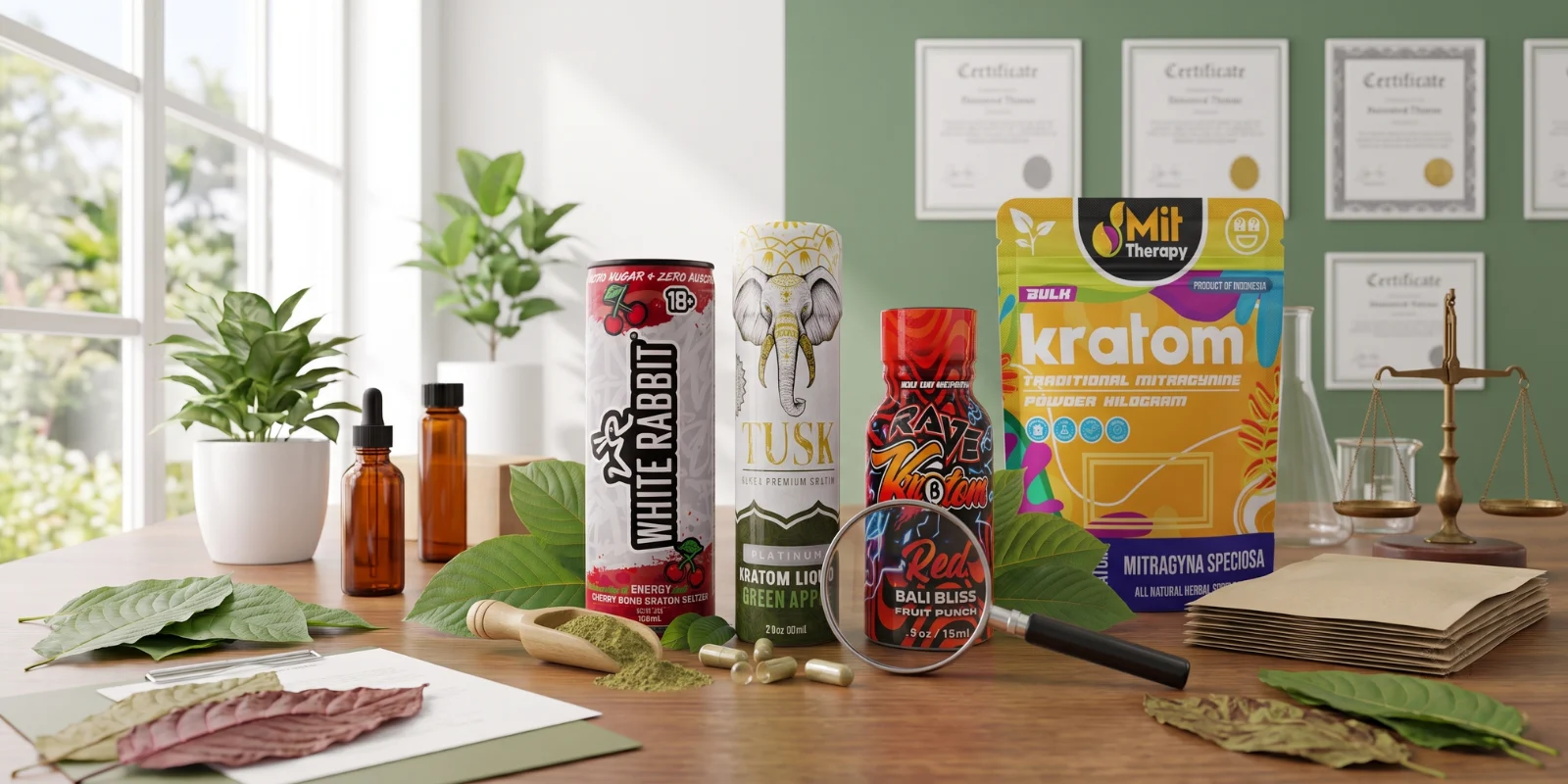
Walk into any Kratom shop, online or in person, and you'll see a wall of names: Red Bali, White Borneo, Green Malay, Maeng Da. If you're not sure what separates one from another, picking a product can feel confusing.
Understanding how Kratom strains are classified, what different names represent, and which factors to consider before buying can make the process much simpler. In this “how to choose the right kratom strain guide” we will cover the key points to help you compare Kratom strains and choose a product with more confidence.
🎯What You'll Learn?In this Kratom strain selection tips and guide, you'll learn how to:
|
Understanding Kratom Strain Classification
Kratom leaves come from the Mitragyna speciosa tree, and every leaf has a central vein running through it. As the leaf matures, that vein shifts in color, which is where the "Red," "Green," and "White" designations come from.
🍀Vein Color Categories
White Vein: Comes from younger leaves, typically harvested earlier in the growth cycle.
Green Vein: Comes from leaves harvested at a mid-point in maturity, between the white and red stages.
Red Vein: Comes from the most mature leaves, harvested later in the cycle.
Yellow Vein: Unlike red, green, and white, yellow is not a naturally occurring vein color. It's a processing designation created through extended drying, fermentation, or blending of other vein types.
How to Choose the Right Kratom Strain
Once you understand vein colors, choosing a strain comes down to a handful of practical checks.
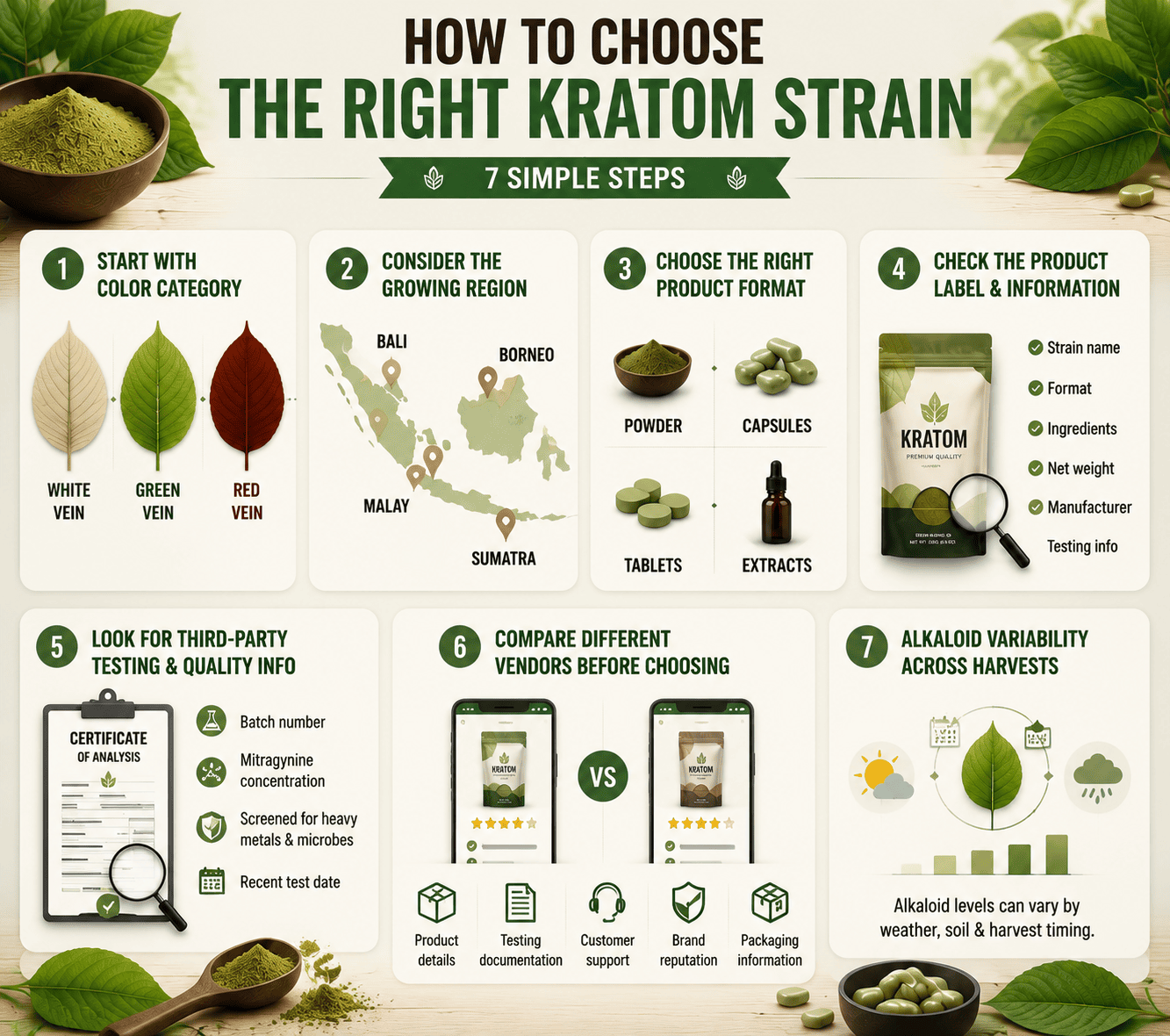
1. Start With the Color Category
Vein color is the first filter most shoppers use, simply because it's the most visible and widely used classification system. Getting familiar with white, green, and red as starting categories makes every other label easier to understand.
2. Consider the Growing Region
Many Kratom strains are named after regions where Kratom has traditionally been cultivated, including Bali, Borneo, Malay, and Sumatra. These regional names are commonly used across the industry to distinguish different product varieties.
3. Choose the Right Product Format
Kratom is available in several formats, including:
Kratom Format | Description |
A traditional format made from ground Kratom leaf material. | |
Pre-measured capsules containing Kratom powder, offering a convenient alternative to loose powder. | |
Tablets | A compact format designed for easy storage, handling, and portability. |
Extracts | Concentrated Kratom products created through additional processing methods. |
Choosing the right format depends on your personal preferences, storage needs, and shopping requirements.
💡 Know more about Kratom products: |
4. Check the Product Label and Information
A detailed product label helps you understand exactly what you are purchasing. Look for important details such as:
Strain name
Product format
Ingredient information
Net weight
Manufacturer details
Testing information
5. Look for Third-Party Testing and Quality Information
A Certificate of Analysis (COA) from an independent lab confirms what's in a batch, including alkaloid concentration and screening for contaminants. Here's what a solid lab test report should include:
Batch number matching the product
Mitragynine concentration listed
Screening for heavy metals and microbial contaminants
A recent test date from a third-party lab
6. Compare Different Vendors Before Choosing
Different vendors may offer similar strain names, but product information and quality standards can vary. Before purchasing, compare factors such as:
Available product details
Testing documentation
Customer support
Brand reputation
Packaging information
7. Alkaloid Variability Across Harvests
Best Kratom Strain for Beginners
For first-time buyers, choosing from the many available Kratom varieties can feel overwhelming. Starting with commonly recognized strains can make it easier to understand product differences and explore available options.
⭐Popular Beginner-Friendly Strains
Red Bali: A widely available red vein strain sourced from Bali, known for consistent, large-scale processing.
White Borneo: A young-leaf white vein strain from Borneo, dried indoors for a lighter color and finer grind.
Green Malay: A mid-maturity green vein strain from Malaysia, typically sold as a single, unblended origin.
White Sumatra: A white vein strain from the island of Sumatra, valued for its single-region sourcing.
💡 Trying the above-mentioned Kratom strains for the first time? Read these next: |
🚩Red Flags to Look for When Buying Kratom Products
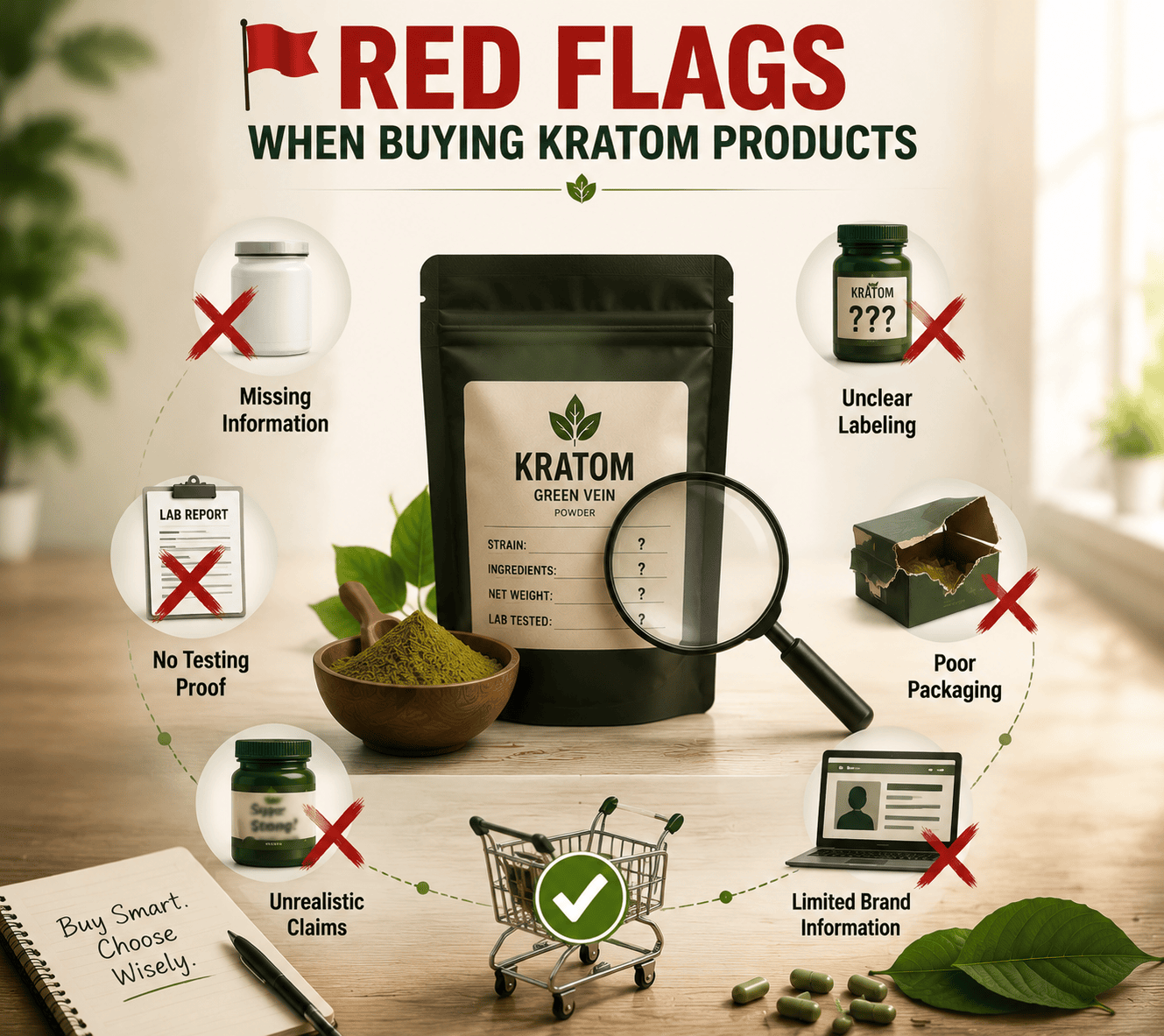
When comparing Kratom products, avoid vendors or listings that lack important product details. Some warning signs to watch for include:
Missing product information: Avoid products that do not clearly list strain names, ingredients, or product details.
No testing information available: Vendors that do not provide any quality documentation may offer less transparency.
Unclear labeling: Be cautious of products with incomplete or confusing labels.
Unrealistic product claims: Avoid products making exaggerated or unsupported statements.
Poor packaging details: Proper labeling and packaging information are important indicators of a professional product listing.
Limited brand information: Choose vendors that provide clear details about their products and standards.
FAQs
1. What Is The Best Kratom Strain For Beginners?
Single-origin, unblended strains like Red Bali, White Borneo, or Green Malay are a good starting point since they involve fewer processing variables than blended products.
2. How To Choose The Right Kratom Strain?
Start with the vein color category, then narrow down by region, product format, and label information. Confirm your choice with a Certificate of Analysis from the vendor.
3. Which Kratom Strain Should I Use?
Choosing the right strain entirely depends on whether you are a beginner or an experienced user. Consider factors such as strain category, product format, label information, and vendor transparency to compare available options before making a choice.
4. What's The Difference Between A Single-Origin And A Blended Kratom Strain?
A single-origin Kratom strain is named after one specific regional classification, such as Bali, Borneo, or Sumatra. A blended Kratom product combines multiple varieties or classifications, so it is important to check the product details before choosing.
5. What Is The Best Way To Store Kratom?
Store Kratom in a cool, dry place away from direct sunlight, heat, and moisture. Keeping it in a sealed, airtight container can help protect the product’s quality over time.
💡 Know more about: How To Store Kratom For Maximum Freshness?
6. Can I Mix Different Kratom Strains?
Yes, many shoppers combine different vein colors or origins based on personal preference. This is essentially how blended products, including some labeled as Maeng Da, are created — by mixing two or more strains into one batch.
7. How Much Kratom Should I Use When Starting Out?
Beginners are generally better off starting with a small quantity of a single-origin strain rather than a large supply or a blend.
📜 Related reads:
Disclaimer: This article is provided for informational and educational purposes only. Kratom product availability, labeling, regulations, and vendor practices may change over time. Readers should review current product details, testing information, and applicable regulations before making any purchasing decisions. This content does not endorse any specific Kratom strain, product, or vendor and is not intended to provide medical, legal, or professional advice.