
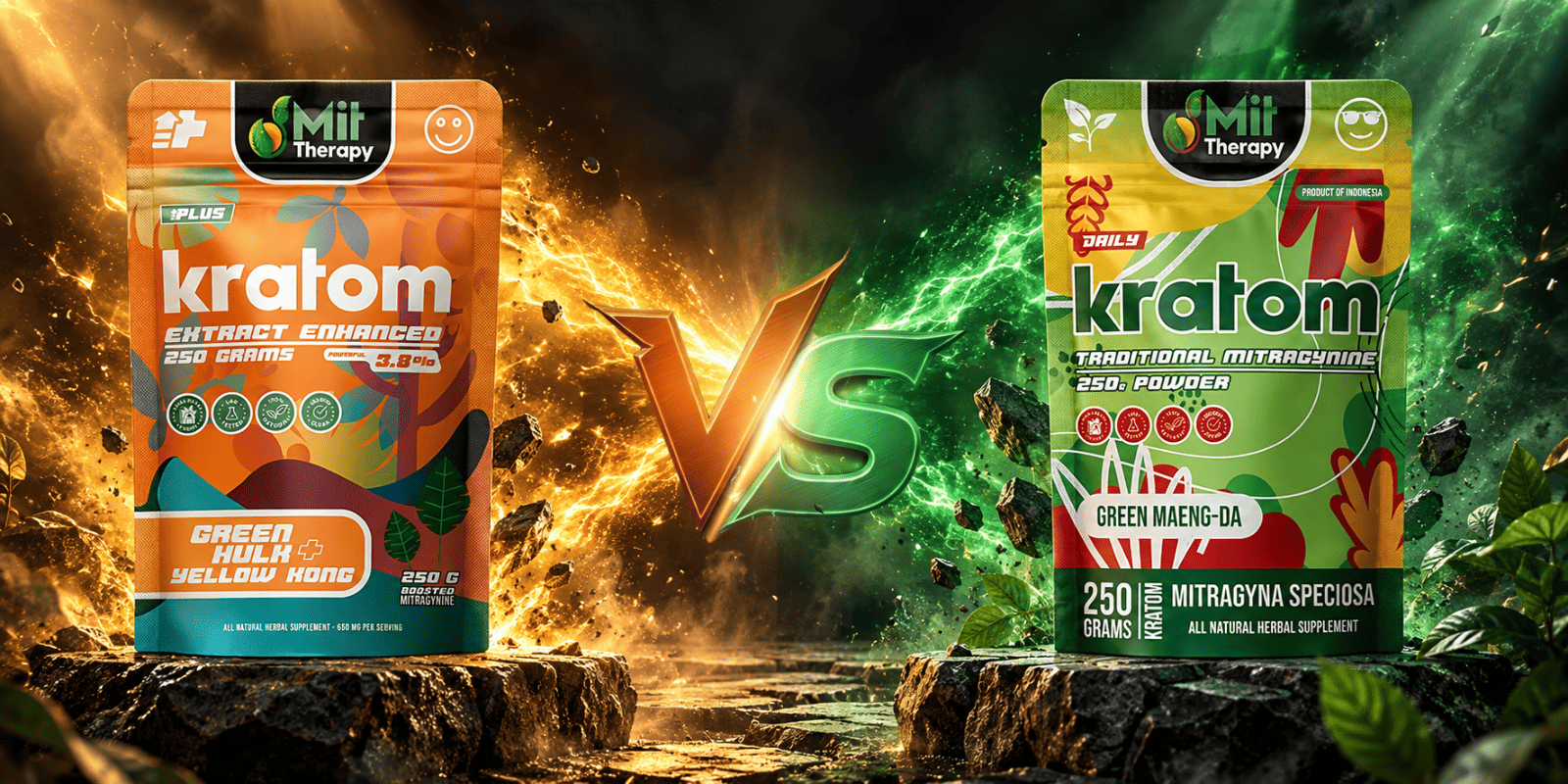
 Green Kratom comes from leaves harvested at mid-maturity and dried using shorter, low-UV methods that preserve their natural vein color. Yellow Kratom, on the other hand, isn't a naturally occurring vein color at all — it's created through extended drying, fermentation, or blending techniques applied after harvest. Because these two categories are made so differently, it is important to understand what really sets them apart?
This guide will cover everything around Yellow Kratom vs Green Kratom — from their distinct alkaloid profile to key strain characteristics. So you can figure out how their color, processing methods, naming conventions, and overall characteristics differ before comparing the two.
⭐Yellow vs Green Kratom — Key Takeaways
|
Table of Contents
What Is Green Kratom?
What Is Yellow Kratom?
Yellow Kratom vs Green Kratom: Quick Comparison
Yellow Vein vs Green Vein Kratom: Harvesting and Processing Methods
Yellow Kratom vs Green Kratom: Key Differences
Popular Strains: Yellow vs Green Kratom
Similarities Between Yellow and Green Kratom
Yellow Kratom vs Green Kratom: Which Fits You Better?
FAQs
What Is Green Kratom?
Green Kratom is a commercial classification of Mitragyna speciosa, a tropical tree native to Southeast Asia, harvested at a mid-maturity stage when the leaf veins appear green.
This means the leaves are picked at normal peak growth and dried simply indoors to keep their natural green color and original plant traits intact.
What Is Yellow Kratom?
Yellow Kratom is a specialty product created through specific drying, fermentation, or blending techniques rather than coming from a distinct tree with yellow-veined leaves.
Simply put, farmers use extra steps like sun-baking or mixing powders after the harvest to change how the final product looks and tastes.
Yellow Kratom vs Green Kratom: Quick Comparison
Comparison Base | Green Kratom | Yellow Kratom |
Vein Nature | Biological growth stage | Post-harvest creation |
Drying Standard | Indoor air curing | Sun-baking or fermenting |
Chlorophyll Status | Highly preserved | Partially broken down |
Powder Hue | Green to olive-green | Golden to light tan |
Tannin Profile | Raw and sharp | Oxidized and smooth |
Batch Predictability | Highly uniform | Variable by vendor recipe |
💡 Know more about these two popular Kratom strains, read our detailed guides:
Yellow Vein vs Green Vein Kratom: Harvesting And Processing Methods
Drying and harvest timing are what separate one vein color from another, so it's worth looking at each process side by side.
Green Kratom Processing
Leaf Selection: Farmers harvest the leaves exactly at mid-maturity when the physical veins match the blade color.
Light Exclusion: Curing occurs inside temperature-controlled barns with minimal exposure to direct UV rays.
Moisture Evaporation: Air circulation grids dry the leaves uniformly to safeguard native plant compounds.
Milling Consistency: Dried leaves move directly to micro-milling without undergoing any secondary aging steps.
Yellow Kratom Processing
Base Harvesting: Leaves can be gathered at various maturity phases depending on the vendor's formula.
Extended Sun Exposure: Curing frequently involves deep outdoor sun-baking to shift leaf chemistry via UV weathering.
Moisture Fermentation: Certain protocols require packing damp leaves into sealed bags to initiate structural curing.
Composite Blending: Alternatively, processors mix exact weight fractions of finished red and green powders together.
💡 Learn more about — How Is Kratom Made? From Leaf to Product
Yellow Kratom vs Green Kratom: Key Differences
Here’s a quick side-by-side look at the main differences between Yellow Kratom and Green Kratom.
⭐Alkaloid Profile
Every Kratom leaf contains natural plant compounds called alkaloids that determine its overall biological makeup. When leaves are dried indoors, these compounds stay in their original form, but exposing the leaves to sun or moisture changes how these compounds are balanced.
Kratom alkaloid Comparison: Green Kratom contains higher levels of unoxidized primary mitragynine, while Yellow Kratom has higher relative levels of 7-Hydroxymitragynine and minor secondary alkaloids because parts of the native mitragynine oxidize during the extended curing process.
🌿Raw Leaf Vein Coloration
The physical appearance of the veins on the underside of a fresh leaf changes naturally as the plant grows on the tree.
Vein Color Comparison: Green Kratom leaves feature actual green veins on the living plant, whereas Yellow Kratom leaves do not exist in nature and only get their designation through processing after harvest.
✔️Final Powder Appearance
Green Kratom powder typically ranges from a medium green to olive shade. Yellow Kratom powder is lighter, often described as golden or pale tan color from sun-baking or fermentation.
😋Taste Profile
The curing process directly impacts the natural organic compounds, called tannins, which change how the powder feels on the tongue.
Taste Comparison: Green Kratom has a sharp, bitter, and biting taste due to raw plant tannins, while Yellow Kratom features a much smoother, less bitter taste because the curing process breaks those tannins down.
✔️Aroma Profile
How the leaves are aged modifies the natural herbal scent that the raw powder gives off when opened.
Aroma Comparison: Green Kratom gives off a sharp, crisp, green tea-like scent, while Yellow Kratom provides a deeply earthy, mellow, and slightly sweet scent from moisture fermentation.
🧪Batch Uniformity
The number of steps required to make a specific batch directly changes how easy it is to replicate the exact same product later.
Uniformity Comparison: Green Kratom maintains highly consistent batch standards due to a simple indoor protocol, while Yellow Kratom varies between batches depending on shifting sun hours or proprietary mixing recipes.
Popular Strains: Yellow vs Green Kratom
Strain Lineage | Green Vein (Indoor Cured) | Yellow Processed (Sun-Baked/Blended) |
Bright khaki powder; locks in high unoxidized mitragynine levels. | Dark gold powder; carefully blended for long-term batch uniformity. | |
Borneo | Vivid green powder; retains high natural chlorophyll and a sharp herbal smell. | Amber-tan powder; uses sun exposure to remove the bitter leaf taste. |
Malay | Rich green color; keeps a high concentration of sharp plant tannins. | Muted tan color; uses moisture-curing to break down the biting flavor. |
Sumatra | Deep green leaf veins; features a crisp, fresh grass-like aroma. | Pale tan powder; undergoes a multi-day indoor tray fermentation. |
💡Know more about these different Kratom strains:
Similarities Between the Two Strains
Despite different processing methods, both of these strain categories still share some similarities:
Botanical Origin: Both come from the same species, Mitragyna speciosa, grown across Southeast Asia.
Core Active Compounds: Both contain the same base alkaloids, including mitragynine and 7-hydroxymitragynine, in varying ratios depending on processing.
Product Formats: Both are sold as powders, capsules, and in some cases shots and other edibles, following the same general packaging conventions.
🛒 Looking for Green and Yellow Kratom products? You can search through the wide variety of products in different forms through MIT Therapy:
Yellow Kratom vs Green Kratom: Which Fits You Better?
Now that we have compared Yellow and Green Kratom across the main factors, here is a simple look at which type may suit different buyer preferences.
🟡Who Can Choose Yellow Kratom?
Experienced Users: Individuals who are already familiar with primary strains (red, green, white) and want to try a specialized option.
Preference for Smooth Taste: Best for individuals who struggle with the sharp, bitter bite of traditional green leaf varieties.
Patient Shoppers: Consumers who are comfortable dealing with limited availability, potential shipping delays, or waiting for specific seasonal batches to restock.
🟢Who Can Choose Green Kratom?
Beginners and First-Time Users: Individuals looking for a standard, baseline introduction to the plant using a primary, unblended strain.
Users Preferring a Strong, Earthy Flavor: Those who do not mind a distinct, sharply bitter, and traditional herbal taste resulting from preserved chlorophyll and unfermented leaves.
Budget and Convenience Shoppers: People who want a highly accessible product that is consistently in stock, widely available, and highly price-competitive.
🎯 Still confused about choosing the right strain for you? This guide might help you make the right decision — How to Choose the Right Kratom Strain
FAQs
Is Yellow Kratom a natural vein color?
No. Unlike Red, Green, and White, Yellow Kratom doesn't occur naturally on the plant. It's created through post-harvest processing such as extended drying or fermentation.
Do Green and Yellow Kratom taste the same?
No. Green Kratom generally has a grassier, more herbal taste, while Yellow Kratom's extended processing tends to produce a milder, slightly sweeter profile.
What is yellow kratom good for?
Yellow Kratom is an ideal option for consumers looking for a smooth, less bitter alternative to traditional green or white leaf powders. Its unique post-harvest fermentation and sun-baking processes make it highly suited for buyers who prefer a milder flavor profile and a well-balanced, deeply earthy aroma.
Can I Combine Yellow and Green Kratom?
Yes. Consumers frequently mix these two varieties based on personal preferences to build custom proportions. Standard blends involve combining them in equal quantities to merge the raw traits of the Green variety with the smooth attributes of the Yellow option.
Is Yellow Kratom Available Near Me?
Yellow Kratom can be harder to find locally than Green, Red, or White varieties. You can use a store locator to check nearby Kratom shops, or browse Yellow Kratom online through MIT Therapy if local options are limited.
How to Store Kratom?
Keep the powder inside its original airtight packaging or an opaque glass jar. Store the container in a cool, dark cupboard away from direct sunlight, fluctuating moisture levels, and excess heat to preserve quality.
Learn the best ways of — How To Store Kratom For Maximum Freshness?
Is Kratom legal in the US to buy?
Kratom is legal at the federal level in the United States, but several states and municipalities have passed their own restrictions or bans. Checking your local and state regulations before purchasing is recommended.
Read more about Kratom strains:
Disclaimer: This content is for educational and informational purposes only and is not medical advice. Kratom laws and regulations can vary by state and locality, so always check current rules before purchasing. Product characteristics may also differ by vendor, processing method, and batch.